

F1 2026 engine ‘loophole’ claims: What’s really going on?
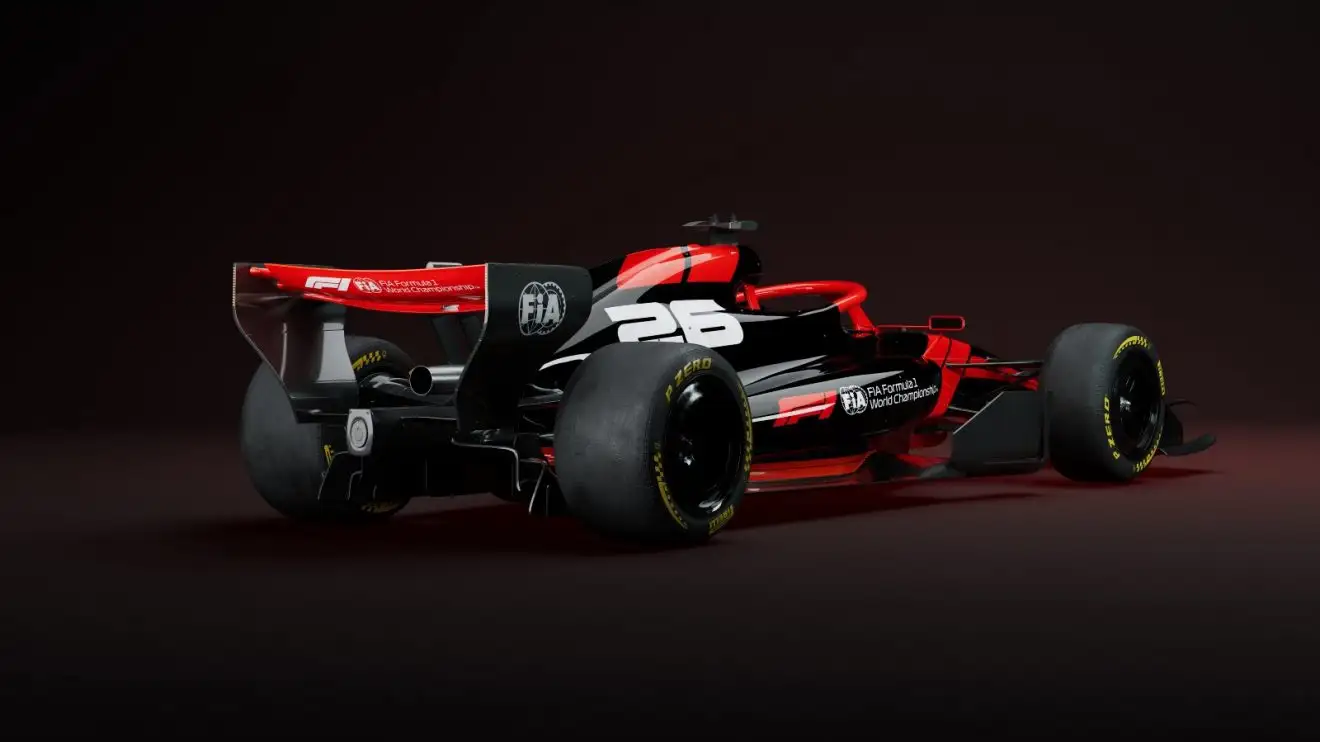
The cars will be shorter and narrow, in the hope of being more 'nimble' for the drivers.
As F1 moves ever closer to the start of the F1 2026 season, discussion remains ongoing in a number of key areas.
That includes specifics relating to power unit rules, with one particular Article within the Technical Regulations the focus of great attention.
Why F1 technical regulation sparks intrigue
For F1 2026, new rules will revolutionise not only the chassis and aerodynamic regulations, but also the engines.
It promises to be arguably the most significant rule change in the world championship’s 76-year history, one that threatens to shake up the established pecking order.
That has prompted significant and protracted discussion with elements of the regulations having been amended or updated in recent months as the regulations approach their final version.
Among them is Article C5.4.3 within the Technical Regulations.
It relates to geometric compression of a cylinder within the engine, and defines not only the maximum compression ratio (16.0) but also the conditions under which that will be measured (the practicalities remain a work in progress).
Reports suggest there are concerns that the wording of the Article allows it to be exploited.
Specifically, it has been pointed out that the compression ratio will be measured at “ambient temperature,” or, when the power unit is essentially cold.
By contrast, while on track, the power unit and its cylinders will rise in temperature significantly.
In competition, it’s therefore possible that the compression ratio changes, and rises above the stated maximum of 16.0.
Indeed, it’s alleged multiple power unit manufacturers are deliberately working to exploit that principle, given the potential power and fuel economy impacts such a move has.
Approached by PlanetF1.com, the FIA acknowledged the wording of the regulations.
“The regulations clearly define the maximum compression ratio and the method for measuring it, which is based on static conditions at ambient temperature,” it said in a statement. “This procedure has remained unchanged despite the reduction in the permitted ratio for 2026.
“The thermal expansion can influence dimensions at operating temperature, but the current rules do not require measurement under hot conditions. The topic is still being discussed within technical forums with the PUMs.
“The FIA continuously reviews such matters to ensure fairness and clarity. Adjustments to the regulations or measurement procedures can be considered for the future.”
While described as a loophole, sources contacted by PlanetF1.com have dismissed or played down the issue, noting that Formula 1 is an engineering contest as much as it is a motor racing championship.
For instance, regulations have traditionally governed flexible wings, with increasingly stringent tests introduced in an attempt to stamp out the practice.
Those tests involve static weights designed to replicate the forces seen out on track, but vision has regularly showed cars that cleared all regulatory checks sporting bendy wings.
Read more about F1 2026
Mercedes begins new F1 era in sharing sound of new power unit
F1 2026 tech analysed: The future of overtaking and biggest car advantage identified
Similarly, mandated minimum tyre pressures dictated by Pirelli are circumvented by drivers pottering around to allow the pressure to bleed out, all while satisfying the regulatory requirements.
Put another way, Formula 1 is a competition built on exploiting the regulations as they are written. An area not covered explicitly by the regulations is ripe for exploration and development.
The game for engineers is to meet the minimum requirement of the regulations and no more.
It’s that ingenuity and curiosity that has led to many of its most iconic developments; the Tyrrell P34 and the Brabham fan car, among others.
Those who don’t dabble in these unregulated areas are potentially leaving performance on the table. In F1, there is no such thing as the ‘spirit’ of the regulations.
“It’s a term often used but the rule book is just text that has a meaning, and you decide what that meaning is and you work to them,” said Paddy Lowe, during his McLaren days over a decade ago.
“There’s no headline regulation that says ‘and above all else you’ve got to maintain within the spirit of what was intended’.”
His comment was made in regards to blow diffusers specifically, but rings as true today as it does then across a raft of technical innovations – power units among them.
Mercedes heads into the new era boasting back-to-back championship wins courtesy of customer team McLaren.
That’s a relationship that will continue, alongside deals with Williams and Alpine in addition to the factory team.
Honda has switched its supply from Red Bull and Racing Bulls to an exclusive arrangement with Aston Martin, whose existing Mercedes supply effectively went to Alpine after Renault opted out as a power unit manufacturer.
Ferrari will supply its own team in addition to Haas and Cadillac, while Sauber becomes Audi and will sport its own design.
At Red Bull, an in-house project in collaboration with Ford will produce engines for Red Bull Racing and Racing Bulls.
Want more PlanetF1.com coverage? Add us as a preferred source on Google to your favourites list for news you can trust.
Read next: Daniel Ricciardo makes ‘important announcement’ as new junior initiative launched


