
What to expect from F1’s crucial 2026 rules talks starting this week


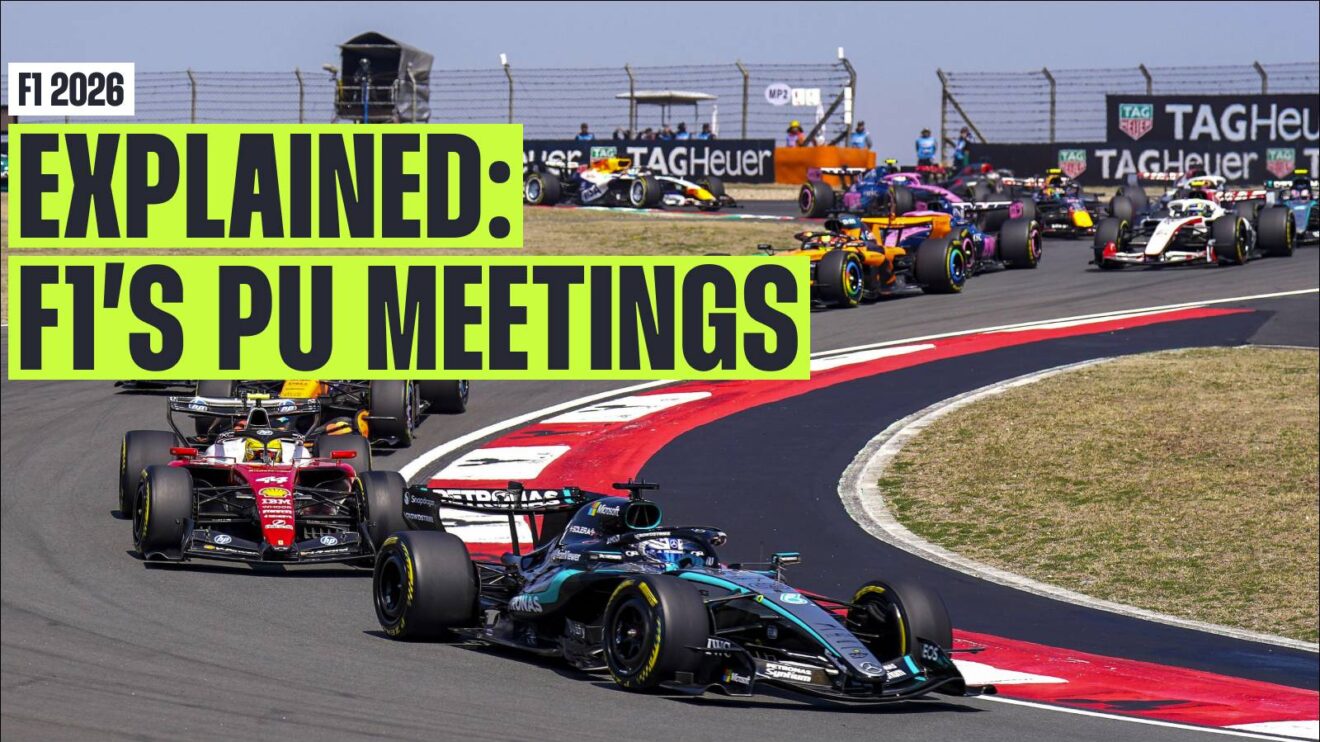
A series of meetings will be held over the coming weeks in order to evalute further F1 2026 regulation tweaks.
Three formal meetings to discuss the evolution of the F1 2026 regulations are scheduled to be held over the coming weeks, with the first taking place on Thursday.
The F1 2026 regulations have been very divisive ever since their introduction, and meetings aimed at evaluating further refinement will take place between now and the upcoming Miami Grand Prix.
What to expect from FIA F1 2026 regulations talks
Want more PlanetF1.com coverage? Add us as a preferred source on Google to your favourites list for news you can trust.
The start of the new rules cycle has been dominated by plenty of driver negativity regarding the techniques required for fast lap times, after the introduction of new 1.6-litre V6 power units that have altered the power output to a near 50/50 split between the internal combustion engine [ICE] and electrical energy from a 4mJ battery.
With the ICE only supplying half of the power, the electrical side of the equation is only possible by constant deployment of energy, which is only possible via topping up of the battery while on track, and is primarily done through braking.
The effect of the energy requirements has meant drivers have to be wary of not using the energy at the wrong parts of the track, and ensuring no accidental deployment at inopportune moments.
This is all while having to concentrate on maximum harvesting techniques by way of ponderous approaches to corners, longer periods of ‘lift-and-coast’, and ‘super-clipping’ – an engine mapping trick that allows a driver to keep their foot flat to the floor while top speed bleeds away as the battery harvests 250kW of energy from the ICE.
While it’s led to some action-packed racing, the artificiality of the racing hasn’t escaped fan and media attention, with criticisms growing in the weeks since the championship began in Australia, spurred on by increasingly loud commentary from the drivers.
With an unexpected gap in the calendar created by the cancellation of the Bahrain and Saudi Arabian Grands Prix, it’s given Formula 1, the FIA, and all the teams a chance to sit back and review the start of the new regulations and evaluate whether further changes are needed.
The first of three scheduled formal meetings regarding whether further evolution of the new F1 2026 regulations is required will take place on Thursday, April 9, and will consist of top-level technical staff members from the teams, as well as the FIA and FOM.
Team principals won’t be involved in this particular meeting, which is essentially a data review exercise looking back over the first three Grand Prix weekends this year; sources have positioned it as a meeting of the TAC [Technical Advisory Committee], one of the four advisory committees to the F1 Commission.
This has come off the back of meetings with team principals, together with senior figures from FIA and FOM, such as the governing body’s Nikolas Tombazis and F1 CEO Stefano Domenicali.
The purpose of this inaugural meeting is to discuss ideas regarding potential tweaks and improvements that can be made to the regulation set, which has been an ongoing process ever since the start of this season. No decisions regarding these proposals will be made during this initial meeting, while a second meeting to further refine proposals is scheduled for the same day next week.
It is in the final meeting, scheduled for April 20, that refinements could be made; this is the meeting that will include the team principals and involves all the stakeholders that make up the F1 Commission.
But multiple sources have downplayed the possibility of major changes being made and, instead, the meetings are with an eye to simple refinement of the regulations as they stand, with all involved having the chance to review the data and findings from the first three events of the year.
After all, even minor adjustments do have an impact on considerations such as car setup and session run plans.
Certainly, there is no prospect of a power unit ratio change in order to increase the ratio in favour of the internal combustion engine, such as a change to a 60/40 split from the current near-50/50.
With the designs of the power units locked in by the manufacturers after years of research and development, the complexity and difficulty of making such a change mean it is not a viable option in the short to medium-term, and certainly is not on the table as a solution at these upcoming meetings.
Regardless, the homologation rules prevent any hardware changes until, at the earliest, 2027.
As was seen at the Japanese Grand Prix, a probable proposal is for energy harvesting limits, although sources have been reluctant to place figures on just how low this could go.
At Suzuka, the harvesting limit was reduced from 9mJ to 8mJ, an agreement that was reached with all the power unit manufacturers in order to rebalance the energy deployment requirements and driver performance.
By reducing the harvestable energy limit, drivers could regain most of the 8mJ through more natural driving techniques; had it remained at 9mJ, more lift-and-coast and super-clipping would have been required.
The implication is that this limit could evolve from circuit to circuit, which would require slight tweaking of the wording of the technical regulations.
Article C.5.2.10 allows for a reduction to 8mJ “at Competitions where the FIA determines that the maximum possible energy harvested per lap attributable under braking and in partial load is no more than 8MJ”, but also allows for a reduction as low as 5mJ for qualifying sessions at circuits where the FIA feels the driving dynamics required to achieve this maximum are excessively unnatural.
Other ideas include revisions to superclipping harvesting limits, such as an increase to 350kW, or allowing for more energy recovery on the formation lap, or changes in protocol with regard to how movable aero is utilised – tweaks that have serious performance and safety-related considerations.
Given that these areas straddle different sections of the regulations – whether technical or sporting – how potential changes can be made and communicated differs, depending on the provisions of the regulations in question.
It’s worth remembering that discussions of regulatory evolution are a standard part of the process, particularly in the early stages of a ruleset.
This evolution can already be seen since the start of this season, with tweaks made to the starting procedure due to the concern over the greater lengths of time needed to get the power units in a safe condition for launch off the line, as well as the tweak made in Suzuka with regard to energy harvesting.
As such, these meetings are not ‘extraordinary’, and discussions between all the relevant shareholders would have occurred regardless of the gap in the calendar.
The cancellation of the Bahrain and Saudi Arabian Grands Prix has merely allowed for the formalisation of talks that would have happened either way, and while sources have suggested there is recognition that some change is needed, the number of stakeholders involved means that a consensus that is palatable for everyone will be difficult to come by.
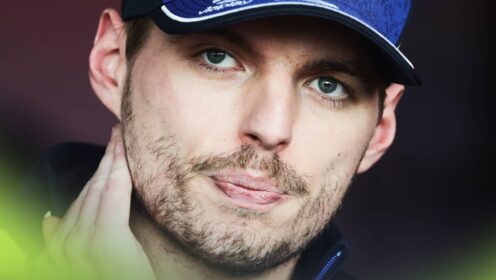
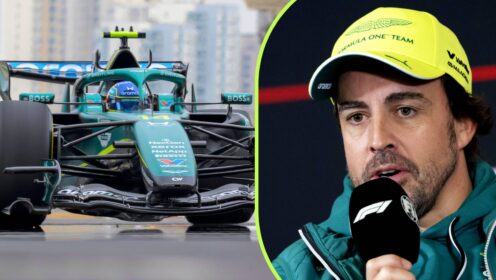
Certainly, the drivers have been vocal about wanting significant change, with high-profile names such as Max Verstappen, Lando Norris, and Fernando Alonso expressing serious misgivings about the driving techniques needed to generate laptime, while the back-and-forth nature of the battery-deployment-centred racing has divided fans and media in terms of palatability.
The drivers are known to have been expressing their views in briefings over the Grand Prix weekends, with many coming out urging rule changes following Oliver Bearman’s 50G crash at Suzuka.
The British driver escaped injury in a frightening accident that was triggered by his being caught out by excessive closing speeds against Franco Colapinto’s Alpine. With Bearman in full energy deployment, his closing speed on Colapinto was circa 50km/h and, when the Argentine driver went to defend his position, Bearman took avoiding action and crashed.
It was a defensive move that would not have been unusual under previous regulations, but the lack of uniformity of power deployment, which is dictated by a computer algorithm and not by the driver’s right foot, created a major gulf in closing speed.
“As drivers, we’ve been extremely vocal that the problem is not only qualifying, but it’s also racing. We’ve been warning that this kind of accident was always going to happen,” GPDA director Carlos Sainz said after Suzuka.
“Here, we were lucky that there was an escape road. Now imagine going to Baku, or going to Singapore, or going to Vegas, and having these kinds of closing speeds and crashes next to the walls.
“We, as GPDA, have warned the FIA that these accidents are going to happen a lot with this set of regulations, and we need to change something soon, if we don’t want them to happen.
“It was 50G, I heard, just imagine what kind of crash you could have in Vegas, Baku, etc.
“I hope it serves as an example, and the teams listen to the drivers, and not so much to the teams and some people who said the racing was okay, because the racing is not okay.”
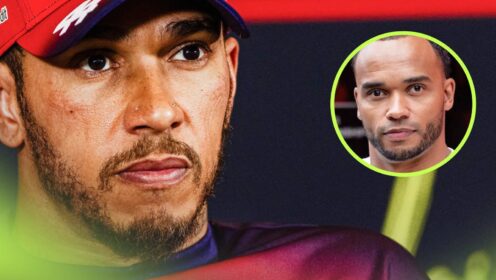
Coming into the Suzuka weekend, seven-time F1 World Champion Lewis Hamilton said that harvesting considerations are the “least enjoyable” aspect of the new rules, but said the effects on the racing have been positive.
“I think if you go back to karting, it’s the same thing,” said the Ferrari driver. “People going back and forth, back and forth, you can never break away. No one has ever referred to go-karting as yo-yo racing. It’s the best form of racing.
“And Formula 1 has not been the best form of racing in a long time. You just couldn’t follow.
“Out of all the cars that I’ve driven in 20 years, this is the only car that you can actually follow through high speed and not completely lose everything that you have. You can stay behind it.
“We had the DRS before, which I think was a bit of a band-aid for that issue. Okay, now we have the power difference, but it’s so small the power difference.
“But when you get ahead, the cars behind, they can keep up with you.
“I personally find it much more fun, because that’s the most overtaking and best battle I’ve had since Bahrain years and years ago with Nico.
“But that’s how racing should be. It should be back and forth, back and forth. It should not be like one move is done and that’s it.
“So I personally like that sort of racing. We just need all the rest of the teams to kind of close up so we have more of those battles.”
Following the weekend, his stance appeared to have changed somewhat, saying that he’s “not expecting much” from the upcoming meetings, claiming the drivers are not being listened to.
“I know I hope they make some big changes,” he said.
“The drivers don’t have a say,” he said. “We have no power. We’re not on the committee; we have no voting rights.”
PlanetF1.com understands driver views and conversations will form part of the consideration of what changes, if any, are made going forward.
It’s been suggested that the drivers and teams are not in alignment on their respective views, which is what drivers such as Hamilton are said to be alluding to: while the drivers want changes, sources have suggested the teams are pleased with the product as it has evolved for this year.
Indeed, top-level sources have suggested that fans are enjoying the racing more so than under previous regulation cycles, and there is no sense of urgency that the rules have had a damaging effect on the racing. However, there is not yet any data or figures to back up these claims, which is at odds with perceived social media sentiment as fans voice their concerns.
Want to be the first to know exclusive information from the F1 paddock? Join our broadcast channel on WhatsApp to get the scoop on the latest developments from our team of accredited journalists.
You can also subscribe to the PlanetF1 YouTube channel for exclusive features, hear from our paddock journalists with stories from the heart of Formula 1 and much more!
Read Next: Be the first to know by joining PlanetF1’s WhatsApp channel