

F1 delta: What does it mean and what different contexts are there?


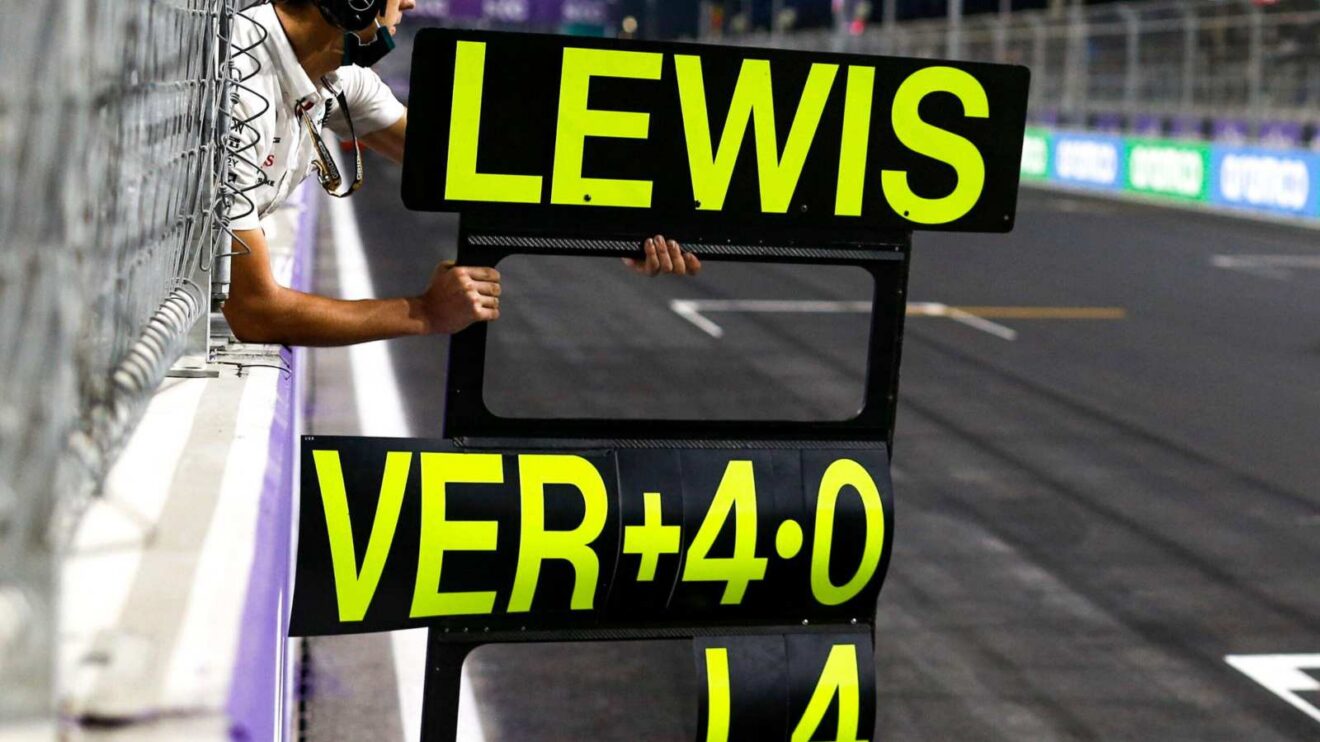
Delta is an important catch-all term used through a Formula 1 weekend.
More often than not on team radio or otherwise, a common F1 term heard throughout any race weekend is ‘delta’, and in its simplest form, delta means the time difference between two values.
Delta is used in several contexts in Formula 1, so here is a quick, handy guide for what it means when teams and drivers use it over the course of a race weekend.
F1 delta: What it means in different contexts
Lap time delta
Drivers often have a display on their steering wheels, which tells them the difference in time to their last lap or best lap in real time as they round a circuit.
For the most part, this is their lap time delta, which tells them if their pace is improving or slowing compared to what came beforehand.
This is particularly useful in qualifying, when drivers are continually trying to find improvements throughout the session.
In race conditions, a lap time delta can also be a driver’s target time to hit, to optimise their race strategy.
Separately, it’s broken into two categories:
A negative delta is when a driver is faster than their best or target time. This is shown with a minus sign on a driver’s steering wheel, while the opposite is true for positive delta, with drivers going slower and denoted by a plus on their steering wheel.
Pit stop delta
A pit stop delta is the amount of time on average that drivers lose when undergoing a pit stop.
The longer a pit lane or the slower the speed limit is, the longer the delta is. This can be added to by a slow stop.
More explanations from the world of Formula 1
F1 jargon decoded: Breaking down what key Formula 1 terms mean
How to become an F1 driver: Money, dedication, talent and more
Safety Car or Virtual Safety Car delta
When the Virtual Safety Car is deployed, drivers have to stick to a lap time around 30 to 40 per cent slower than at full racing speed. This is the delta time between the Safety Car lines, or the minimum lap time drivers have to adhere to in these conditions.
Race Control gives drivers live information as to whether or not they are going faster than the permitted time, so drivers must keep to a positive delta to avoid a penalty.
For the full Safety Car, drivers catch up to the lead car on track and stay above the minimum speed at all times, so as to not fall too far behind the car in front.
Tyre delta
In short, this is the difference in lap time between two tyre sets or compounds.
This is best exemplified in qualifying, when a fresh set of soft tyres carries a higher delta over a set of medium and hard tyres.
This can be a different story in the race. Tyre delta can be affected by the freshness of the tyre, as peak tyre performance reduces as a set wears, and the compound, depending on which tyres can provide the best overall strategy.
Want to be the first to know exclusive information from the F1 paddock? Join our broadcast channel on WhatsApp to get the scoop on the latest developments from our team of accredited journalists.
You can also subscribe to the PlanetF1 YouTube channel for exclusive features, hear from our paddock journalists with stories from the heart of Formula 1 and much more!
Read next: Rwanda F1 circuit: What we know about the new RISE Motordrome