
Ayao Komatsu urges patience on F1 regulation changes after early energy criticism


Ayao Komatsu has urged the FIA not to rush into any F1 regulation changes until a full picture has formed.
Ayao Komatsu has urged against any “knee-jerk” changes being made to the F1 regulations without sufficient data being gathered first.
The regulations, specifically pertaining to energy harvesting and deployment, came in for criticism after the first race of the year.
Ayao Komatsu urges patience over F1 regulation tweaks
Want more PlanetF1.com coverage? Add us as a preferred source on Google to your favourites list for news you can trust.
With the F1 cars overhauled for this year via the chassis and power unit regulations, the Australian Grand Prix proved exciting from a spectator viewpoint as the lead changed between George Russell and Charles Leclerc on multiple occasions.
But this back-and-forth was down to their respective states of energy deployment and boost, as opposed to being meaningful overtakes, resulting in many of the drivers, including Leclerc, commenting on the new driving dynamics resulting in “artificial” racing.
With the new formula dominated by energy management, and many of the drivers not hiding their displeasure about how the cars now need them to actively drive in a way antithetical to a racing driver’s instincts, the FIA’s Nikolas Tombazis has said there’s an intention for the governing body to sit down with the teams after this weekend’s Chinese Grand Prix.
Revealing that there are “aces up their sleeve” when it comes to further energy harvesting and deployment tweaks, there is a possibility of the rules further evolving in a bid to improve the driving dynamics, even if the trade-off is slower overall lap times.
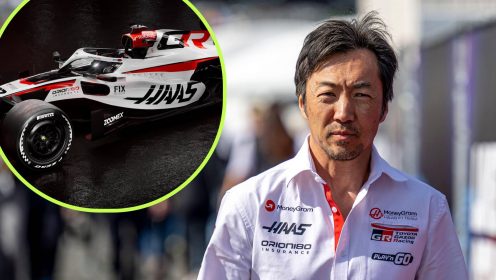
With this meeting set to take place after two Grands Prix, Haas‘ team boss Ayao Komatsu has urged against the sport moving too quickly to make changes for the sake of change, and gather a much broader data set to evaluate what may need altering.
“Two [races] is still a small sample,” he said.
“At the F1 Commission meeting in Bahrain, we talked after testing, let’s say we had some discussions, and we said definitely we shouldn’t do a knee-jerk reaction, because, if you’re going to change something, we should change it once, and then get it right.
“It’s so much circuit-dependent, and then overtaking-wise, you know, even the previous generation of cars, Melbourne, Suzuka, it is very, very difficult to overtake.
“Shanghai is slightly easier but, if you went to Bahrain, that’s a much easier circuit to overtake. So, for me, you’ve got to see several different circuits and then decide on what the global issues are. What do we need to concentrate on solving?
“Because if you just did it with one or two events, I don’t know, I don’t think we can form a very balanced opinion or feedback.”
The dataset to create a much more informed picture of reality, Komatsu suggested, is around five race weekends across a variety of circuits.
“Melbourne is a very front-limited circuit and a difficult circuit to overtake,” he said.
“Shanghai is much easier to recover energy, very, very long straight – overtaking should be possible.
“Suzuka, again, I think it’s pretty difficult, but overtaking traditionally is very difficult, right? Then Bahrain is much easier to overtake. Jeddah, totally different story. And then you’ve got Miami, so if you’ve done those circuits, I think we’ve got enough of a spread to make a good decision.”
Another topic pertaining to the regulations is that of race starts, with the drivers struggling to make consistently quick getaways, as has been the norm in recent years.
With the MGU-H removed from this year’s power units, the drivers need to spool up their turbos into the right window to ensure a quick launch, and the time it takes to do this has seen the FIA extend the start procedure to compensate.
Despite this, some drivers fluffed their starts in Australia, with one particularly scary incident seeing Franco Colapinto barely avoid slamming into the back of Liam Lawson’s Racing Bulls car.
A key preparatory step for the drivers is also getting their batteries charged on the formation lap, to help with the battle into Turn 1. Between the various considerations required to get a car ready for the start, it’s perhaps not surprising that the starts are less consistent.
For Komatsu, he believes any changes rushed through at this moment would only result in unintended consequences.
“For me, it’s way, way too early. I mean, teams… we had the same set of regulations, right? All the teams had the same set of regulations,” he said.
“So you cannot do a knee-jerk reaction after one event, but everybody is learning at such an amazing rate.
“The information that we didn’t do a very good job… we actually drained the battery a lot more than we should have because we weren’t aware of certain things.
“But then you review the data from Sunday, now it’s Thursday, the understanding we got from that one formation lap… I’m sure, if we did it again, we’d do a much better job, which we should apply here.
“But imagine then if we change the regulation formation lap now, moving the goal post right, what do we do?
“I’m sure if you make those knee-jerk reactions, you can have unintended consequences, so that’s exactly what we need to avoid now.”
More on the F1 regulations in 2026
Toto Wolff admits F1 rules ‘need tweaks’ despite Mercedes’ Australia dominance
Nikolas Tombazis: FIA will review F1 energy management concerns after Chinese Grand Prix
Referring to the unusual decision taken by the FIA to remove the straight-line mode section on Lakeside Drive, only to reverse that decision hours later, Komatsu said such incidents are evidence of how an unplanned change can occur.
“Things like the straight-line mode first on the Saturday morning, that wasn’t discussed with the teams at all, right?” he said.
“So, as an F1 community, we’ve got to work together, and don’t have those knee-jerk reactions.
“But it’s actually good, because we had a meeting with all the team principals earlier on, including the formation lap topic. Of course, opinions are divided.
“But what doesn’t change is that everybody is learning quickly, right? So let’s not just rush into a knee-jerk reaction, because that’s the worst thing that can happen.
“You change something, then the engineers need to run the new things. Drivers need to run the new things. ‘Oh, wow, now this is an unintended consequence. Now we have introduced a new problem. We need to change it again’.
“Let’s not do that. Observe, let the teams down because we are learning fast.
“Give drivers some stability, then they have a chance to get used to these new regulations as well.
“Then, after several races, look at the global picture, not just formation laps. What do we need to improve? What is actually safety-critical? What is affecting the show? Then take a decision from there.”
Asked whether he believes starting issues are already consigned to the past, Komatsu said he couldn’t speak for other people.
“But we can make mistakes, right?” he said.
“We may experience something we didn’t experience in Melbourne, which is a far bigger issue on the formation lap here than in Melbourne, and then we may mess up.
“So I cannot say that nobody’s gonna have an issue. But we are learning at such a rapid rate. Even doing burnouts, we now really understand how much it affects certain things.
“But also, sitting on the grid, doing the pre-start revs, that’s charging the battery as well, right?
“Also, if you talk about safety, people not getting off the line. That’s got nothing to do with the battery. You don’t deploy the MGU-K as part of the start.
“That’s more to do with power engagement. So again, like we’ve been practicing in Bahrain testing, we’ve already changed that, so let’s just stabilise it.
“If everybody’s got known goalposts in Formula One, it’s amazing. Everyone learns so quickly. So, can we just stop moving goalposts every time we talk?”
Want to be the first to know exclusive information from the F1 paddock? Join our broadcast channel on WhatsApp to get the scoop on the latest developments from our team of accredited journalists.
You can also subscribe to the PlanetF1 YouTube channel for exclusive features, hear from our paddock journalists with stories from the heart of Formula 1 and much more!
Read Next: Toto Wolff admits F1 rules ‘need tweaks’ despite Mercedes’ Australia dominance