
Does Formula 1 need to change its Virtual Safety Car rules?


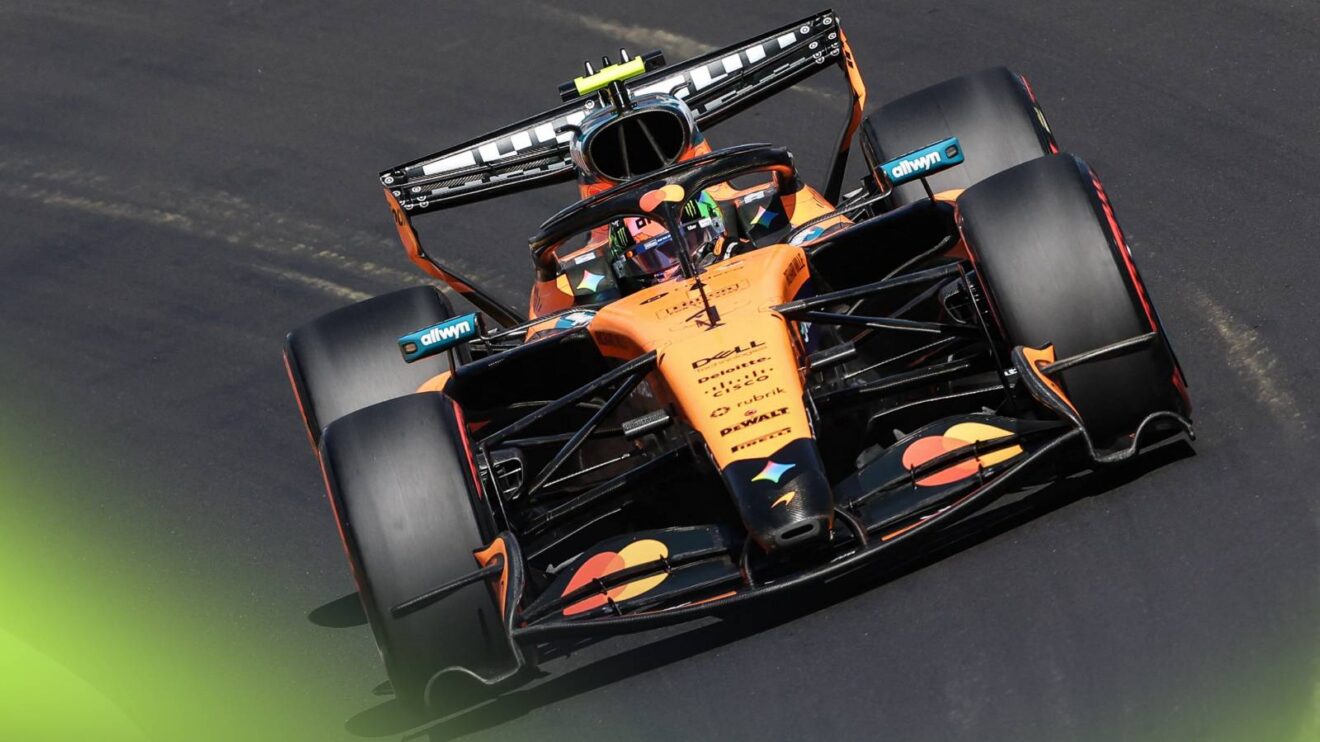
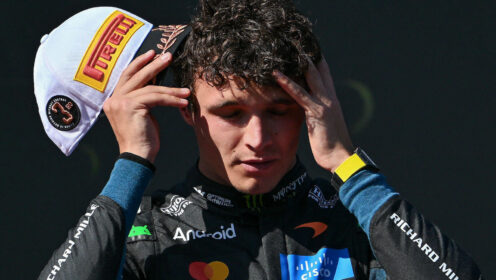
Lando Norris lost a likely victory in Madrid, due to the impact of a Virtual Safety Car.
With the outcome of the Spanish Grand Prix influenced by the Virtual Safety Car, does F1 need to introduce firmer regulations around its use?
The Virtual Safety Car (VSC) was coincidentally deployed for a specific window of time to influence the result of the race in Madrid, with a major time advantage playing to Kimi Antonelli’s favour at the Madring.
Should Formula 1 change its Virtual Safety Car rules?
Lando Norris had opened up a comfortable lead at the Spanish Grand Prix, leading Antonelli on track by six seconds when the VSC was deployed to cover off the stricken Aston Martin of Lance Stroll, who had come to a halt in one of the escape areas.
The VSC, used in situations that do not warrant the full Safety Car and bunching the pack back up together, demands all of the drivers reduce their speed to a specific delta time, allowing for the safe retrieval of a car by the marshals but without affecting the gaps between drivers on track.
But the timing of the VSC was disastrous for Norris: the conditions were deployed immediately after he had passed the pitlane entry and was at the final corner.
But with Antonelli and Max Verstappen being a distance behind him, Norris’ rivals were able to dive into the pits and change tyres, losing less race time than they would have had they pitted while the race was at full speed.
McLaren took the first opportunity it could to haul Norris in, calling him to pit on the next lap.
However, with Stroll’s car recovered, the VSC was withdrawn as Norris came around the penultimate corner and the reigning world champion thus pitted with the race under normal conditions.
The time disparity between his pit stop, made while his rivals were racing at full speed, and those of Antonelli, Verstappen, et al., who pitted while Norris was crawling around under the VSC, meant the race leader came out in fourth and facing a race of damage limitation with the victory lost in just those few seconds.
There was little McLaren could have done differently to respond: while there was sufficient time between the VSC ending and the pitlane entry to command Norris to stay out, the British driver revealed later that his medium tyres had given up their best already, meaning he was already struggling for pace and was facing needing to change tyres regardless.
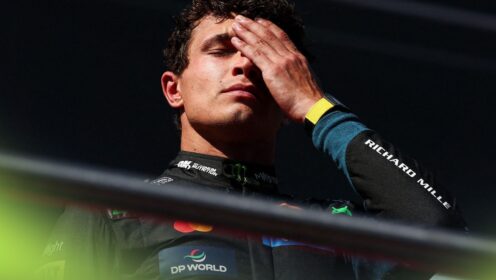
Norris recovered to the podium to claim third place and put pressure on Verstappen at the end, congratulating his rivals on their good races, but made his frustrations regarding the VSC clear.
“We were just insanely unlucky today,” he said.
“I was the only one on the whole grid, that didn’t get the chance to do the pit stop. That’s just unfortunate.
“It’s happened in races and there’s been plenty of times where I’ve gained from it in the past and times where I’ve lost from it, and it’s racing, but never when fighting for a win. So I think it’s probably one of the first times a win has been lost simply because of it.”
Should the VSC rules be changed?
While the Virtual Safety Car is a modern, welcome addition to the options available to Race Control to ensure the safety of track marshals in the pursuit of their duties, the random nature of how it operates means it can have a huge impact on a race – and it’s not so irregular or unique that it doesn’t warrant further scrutiny.
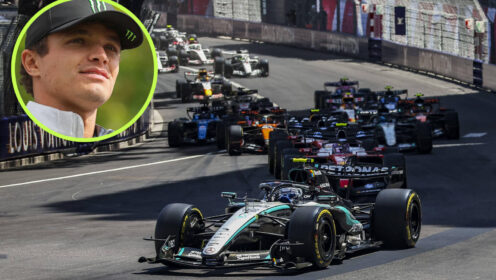
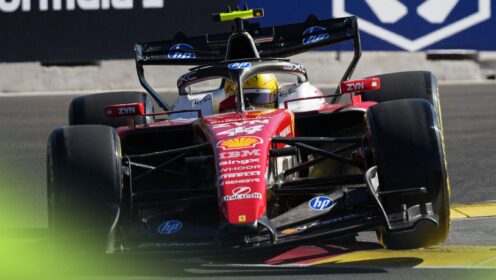
Obviously, part of this is down to timing within a race, and there is another very recent example: the Barcelona Grand Prix this year was decided in Lewis Hamilton’s favour when the Ferrari driver pitted under the VSC on Lap 42, giving him an advantage over Mercedes’ George Russell, who had pitted under normal race conditions.
Unlike in Madrid, this was after the VSC duration proved long enough to give Ferrari the chance to pit him a lap later, as the seven-time world champion had already passed the pit entry when the VSC was initially deployed.
Essentially, the scenarios were fundamentally similar for Hamilton and Norris in Barcelona and Madrid, respectively, but the outcomes were vastly different, due to the disparity in the durations the VSC was deployed for: there’s nothing unusual to be implied from this, merely that the hazard, ironically also a stricken Aston Martin, took longer to clear in Barcelona than it did in Madrid.
Unlike the full Safety Car, there are no regulations regarding the duration of a VSC deployment, merely how it is withdrawn: “When the Race Director decides it is safe to end the VSC procedure, the message “VSC ENDING” will be sent to all Competitors and, at any time between 10 and 15 seconds later, “VSC” on the FIA light panels will change to green, and drivers may continue the session or continue racing immediately”.
The element of luck and chance therefore is factored in by the drivers, which Norris acknowledged when he was asked if the rules around the VSC need revising.
“It’s been brought up many times over the years by different drivers,” he said.
“I think there’s always probably some cons to doing it, but it’s tough. Like I said, I’ve won from it in the past, I’ve lost from it in the past.
“Over the course of a season, it’s hard to know if it’s a good thing or a bad thing. It probably equals out over time.
“Of course, it just hurts more, the fact that I lose a win. There’s literally nothing I could do as a driver today to do a better job. Pole, led the race and to lose it for nothing in my control is, I don’t think, how a race should be won.
“But I think people, I hope people agree, I think people would agree. But it is racing and it’s happened, so I can’t really complain about it. I can be upset about it, but I can’t really complain about it.”
Norris suggested that there are options that could be explored to make the circumstances of the VSC more equitable across the entire field.
“There are things, because we have spoken about it in the past several times, about how it can be at least covered for one lap or everyone has the opportunity to do the pit stops, or you just block the pit entry and no one can box apart from if you have a puncture or something,” he said.
“So, I think there’s a few things you could do to make it more simple and more fair for everyone, but that’s a bigger discussion. This is not something I can just ask for.
“I think it’s something, as a group of drivers, I think we would all want, but there’s a lot more to it. Depending on if it’s raining and there’s a VSC and you’re on slicks, does it mean you can box or not? It’s a complicated subject.
“But I think as a collection of drivers, if we all talk about it, I think everyone wants the same thing, and that’s just fairness for everyone. So of course I’m complaining about it today.
“I could benefit from it next week, next time out, and I could win because of it. So I have to take it on the chin, but I just hope it doesn’t happen to anyone again because it’s just not how you should lose a race.”
Norris’ team boss, McLaren’s Andrea Stella, said it might be worth bringing up the topic at the Sporting Advisory Committee, the first rung of the ladder in the legislative process to get rule changes made in the regulations.
“Offering a personal opinion, I’m puzzled myself as to what’s right,” he said.
“Is it correct to give enough duration such that everyone will have been subject to the same track conditions? So, for instance, the Virtual Safety Car lasts at least one full lap, or do you just keep it in the hands of the gods, and sometimes you are lucky, sometimes you are not?
“I’m not sure myself, but, in general, there’s the right place to have this sort of conversation, which is the Sporting Advisory Committee, the famous SAC, and this is a topic that may be added to the agenda and discussed over there.
“But if it’s a change, it will have to be a change that goes through the SAC, then the F1 Commission, and then we have to do it at some stage in the sporting regulations.
“I would envisage that this is a relatively lengthy process unless there’s a big push from F1, from the institutions at the FIA or F1, to say, ‘We need to make this, we need to make this different’.
“But, as a competitor at the moment, I would never be right here.”
The only potential question mark that McLaren will review is whether the Woking-based squad should have anticipated the VSC condition, upon seeing the stopped Aston Martin in the escape area.
Mercedes did so with Antonelli, making use of the six-second buffer behind Norris to instruct their driver to slow further, maximising its chances to respond if Race Control did upgrade from the initial yellow flags to the VSC, which the race director did choose to do.
McLaren had far less time to work with, and, therefore, could have ended up pitting under yellow flags, rather than the VSC, which also could have worked against Norris.
“I would have to review with my engineers, see whether it was kind of obvious that it would end up in a virtual safety car. Therefore, you try to anticipate or not,” Stella said of this scenario.
“Here, the problem is that you need to be extremely careful, because it’s 27 seconds if you don’t pit under a virtual safety car.
“So if you get it wrong, it would be extremely penalising. From the lead, you pit unnecessarily, and now you have lost the victory.
“So a good rule is to respond to what is a fact, to what is the real condition of the circuit.
“But we will definitely take a look as to whether in these conditions it was just simply, you know, obvious that he would end up in a virtual safety car. I cannot answer at the moment.”
Want to be the first to know exclusive information from the F1 paddock? Join our broadcast channel on WhatsApp to get the scoop on the latest developments from our team of accredited journalists.
You can also subscribe to the PlanetF1 YouTube channel for exclusive features, hear from our paddock journalists with stories from the heart of Formula 1 and much more!
Read next: Mercedes confirms W17 upgrade timeline as development figures emerge