

Fernando Alonso warns F1 2026 risks ‘less joy’ with robot-style driving
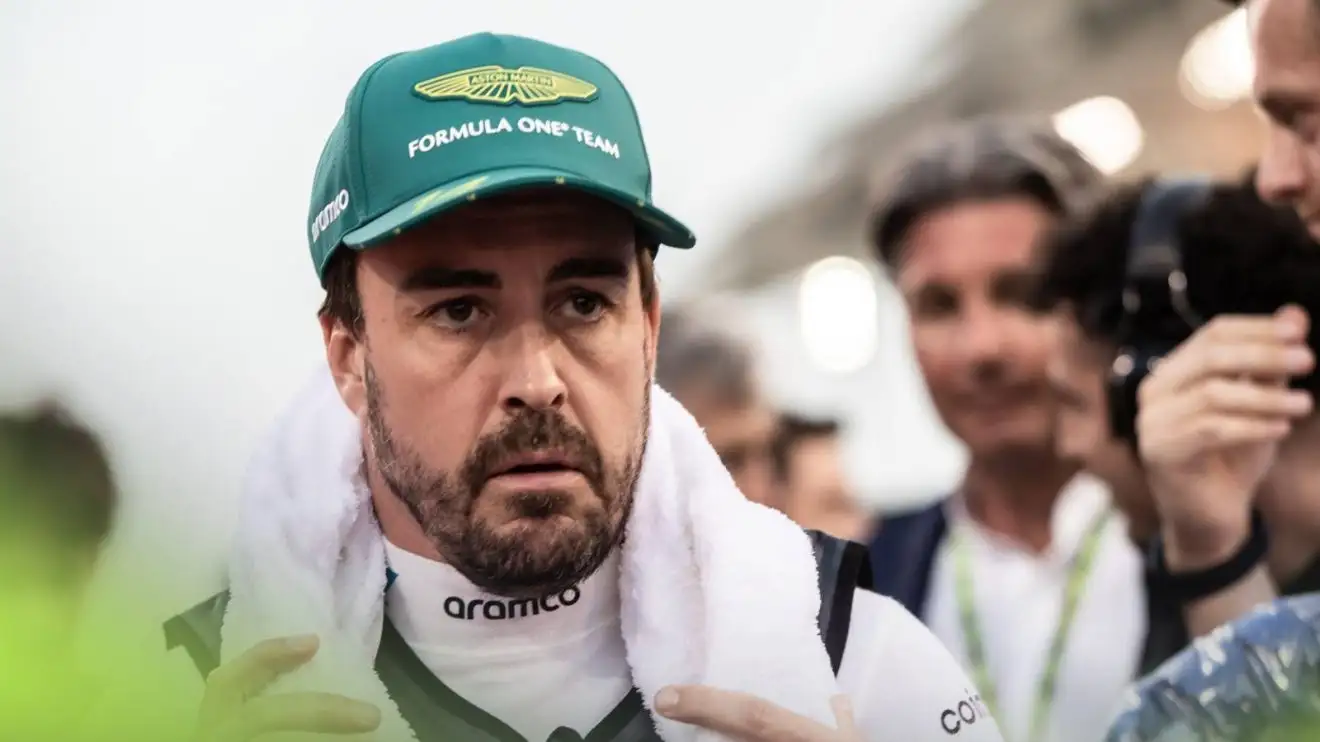
Fernando Alonso has warned some of the joy of driving could be taken away under the new F1 regulations.
Fernando Alonso believes the requirement for extensive energy management in F1 2026 could take “some of the joy” away from driving.
The new regulation set for the F1 2026 cars sees the management of harvesting and deployment of electrical energy become paramount for the drivers, which isn’t being seen as a net positive by all.
Fernando Alonso: F1 moving in a ‘different direction’ to its peak DNA
With the power unit regulations moving to increase electrification to near 50/50 split with the internal combustion engine, what has emerged as the cars have hit the track for the first time is that some of the feared driving dynamics have become reality.
Lifting and coasting is set to become prevalent, even on a full-bore qualifying lap, for instance, while downshifting down long straights is occurring – a scenario that was alerted to as a possibility long before the cars turned from drawings into physical creations, although Mercedes’ George Russell has said he hasn’t found the situation unnatural, as he compared the scenario to being like driving uphill and needing to downshift to optimise power delivery.
Haas’ Oliver Bearman was less kind, saying he has found the reality “a bit sad”, while his team boss Ayao Komatsu has spoken about how drivers can be punished for a failure to correctly conserve energy deployment for the most optimal moments for overall laptime.
The most experienced driver on the grid, Fernando Alonso, has been around for multiple power unit regulations, starting in the 3.0 litre V10 era, moving into the 2.4 litre V8s in 2006, and then through the 1.6-litre V6 hybrids up until the latest-generation – marking his fourth engine regulation cycle.
Having experienced the new regulations for the first time during a day behind the wheel of the new Aston Martin AMR26 in Barcelona, Alonso explained that there some elements to them that he’s enjoying, but said he can’t say that it’s more enjoyable than cars he’s driven in the past.
“I think all the regulations have their own special things and different driving techniques are needed for different cars and different sets of regulations,” he told select media, including PlanetF1.com, during Aston Martin‘s launch event in Saudi Arabia on Monday.
“I think this one is a little bit more dramatic on that regard. Some of the energy management and some of the driving that you have to do in order to optimise the energy around the lap and sometimes even in qualifying, which is a little bit annoying – from a driver point of view, you want to drive 100 per cent.
“I think now you need to think a little bit more than that, but I don’t know. I’ve been driving in IndyCar, and the main game there is to save fuel for 75 per cent of the race.
“I drove in WEC, and the main purpose there was just the energy control as well, with the hybrid system and the traffic, and, at the end of the day, it is just racing.
“You start with the green light on the first lap, and you finish with the chequered flag on the last lap. That’s part of the racing, and you get used to it very, very fast.
“The initial feeling is that you will like to drive flat out, and have a different car. But F1 went into this direction, and these hybrid power units that requires this energy management… I think we will get used to, but, yeah, I think we will never go back to the late 1990s or early 2000s where the cars were light and fast, with the noise of the engine.
“Everything was probably at the peak of the Formula 1 DNA. Now we are moving more into a different Formula 1.
“I don’t know if it’s better or worse, but it’s different for sure.”
With the two-time F1 World Champion well known for being a celebral and intelligent racing driver who has always exploited every possible avenue to further his success, more complex regulations could reward a driver such as Alonso. But, when asked by PlanetF1.com whether he believes the regulations will play to his strengths, Alonso said he’d prefer to have more simplistic demands placed upon him.
“Barcelona was fun, I think, to have a little bit more different energy deployments and things like that, lap by lap, and you know, corner by corner, depending on which gear you use in the corners or how you go on the acceleration,” he said.
“It changes how much energy you will have on the next straight, because on partial throttle, you recharge.
“Then, if you go to full throttle too soon, then you cut too soon as well.
“There are a couple of things that are interesting, and we will play a little bit. But I prefer to drive with not too many systems interacting with your driving style or with your approach to the corners, and it seems that you need to overthink a little bit while driving, and that’s always a risk of having less joy behind the wheel.”
More on Aston Martin in 2026
Alonso ‘finally’ on Adrian Newey’s team at ‘important’ Aston Martin landmark
Aston Martin AMR26 breaks cover as livery revealed
Fernando Alonso: Nicer to drive older cars on the limit of physics
In late 2025, talks with the power unit manufacturers aimed at evaluating an early switch in engine formula to race with a more simplistic power unit with sustainable fuels failed to gain the required support and the new engines are scheduled to see out the full five-year cycle as originally planned.
With the new generation of hybrid engines undeniably adding a new layer of complexity and management to what are energy-starved machines, Alonso said that it’s “probable” naturally gifted and fast drivers will be shackled by the regulations, given the requirements to conserve ultimately proving more rewarding.
“I think it was more interesting before, but we need to sell that for a new generation,” he said, when asked about the complexity of the new rules cycle.
“We cannot say that the cars are worse now, but no one will agree that driving before is worse than driving now. There is, for sure, more adrenaline with the older cars. There is more sense of driving at the limit with the old cars.
“Even when we jump in a go-kart, probably that’s the purest motorsport racing that you can have. It’s nice to drive cars at the limit of the physics and things like that, and not by a kind of efficiency, or a robot style of driving that you need to maximise efficiency.
“But yeah, it is the way the world seems to go in the last few decades, not only motorsport, everything is more or less like that. I’m sure it happens in many other sports, you know, football or basketball, NBA, or whatever… 20 years ago, maybe he was a guy that had a magic night, and now the game is more structured, and you need to have some mechanism to really perform in a basketball game.
“So the inspiration from someone is a little bit forgotten in this generation.”
Read Next: Will Adrian Newey’s F1 legacy be defined in Aston Martin’s new era?