
Formula 1’s hidden workforce revealed in staggering FIA findings


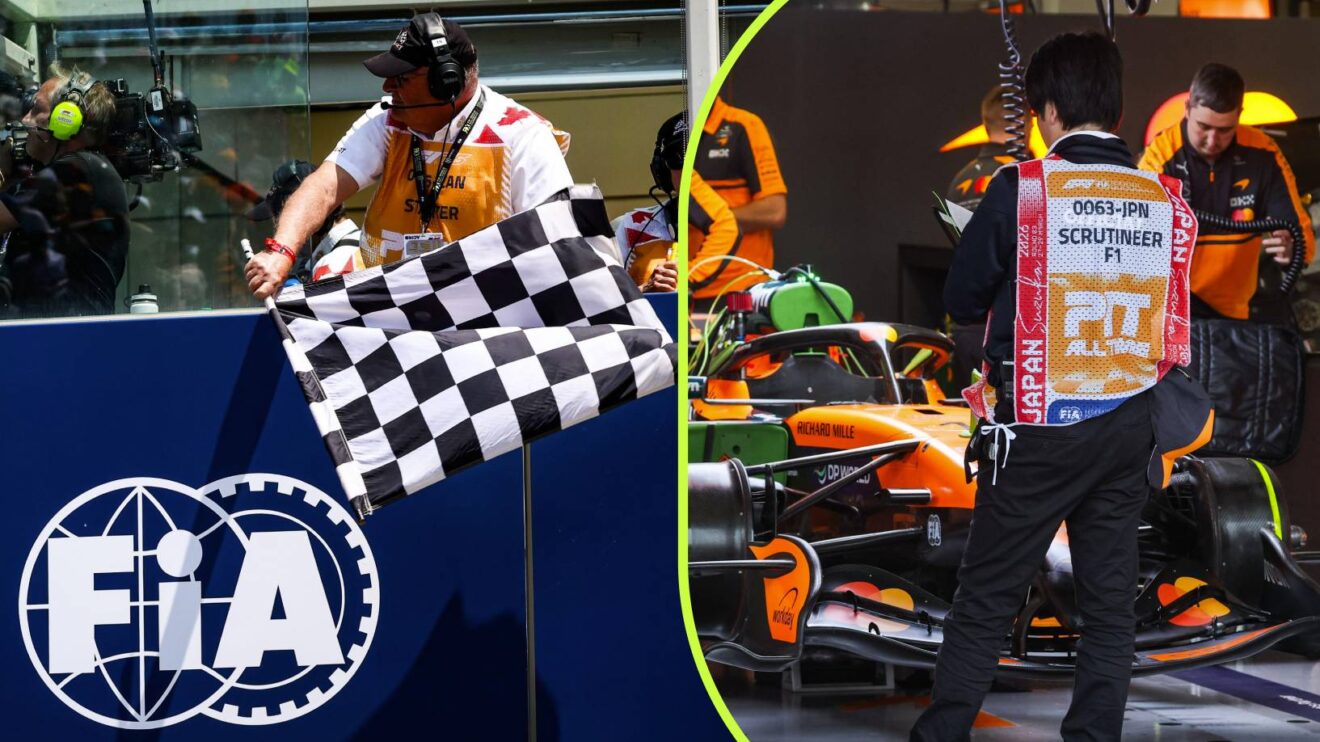
The full extent of how critical the contributions of FIA volunteers is has been laid bare in a new report.
The FIA has revealed how the F1 World Championship relies on the contributions of over 20 thousand volunteers annually in order for its successful staging.
F1’s governing body for motor sport has published a research report revealing, for the first time, just how the sport is underpinned by an “extraordinary scale and importance of volunteering to enable the FIA Formula 1 World Championship”.
FIA reveals Formula 1 hidden volunteer workforce
Want more PlanetF1.com coverage? Add us as a preferred source on Google to your favourites list for news you can trust.
While F1 may be an extremely lucrative enterprise for the competitors and commercial partners, as well as the commercial rights holders of the sport, the championship very much relies on voluntary contributions from a remarkable number of personnel.
But, while unpaid, these volunteers are such a critical part of each weekend that they are all trained to extremely exacting standards: these volunteers make up the ranks of flag marshals posted around each track, race scrutineers, incident officers, and extrication teams that help out medical personnel.
It is the FIA, under President Mohammed Ben Sulayem, that invests heavily in the development pipeline for a sustainable flow of volunteers, and the report published on Friday, undertaken by the FIA University and in collaboration with the Sporting Organisers Working Group [SOWG], has calculated that this investment equates to over €11 million on an annual basis, following consultations and extrapolation of data from race promoters and organisers across the season.
With the FIA being a non-profit organisation, funding such as the deal arranged with Formula One Management through the Concorde Agreement plays a direct role in initiatives and investments in volunteers.
The full report can be read here.
What has the report revealed?
- Each F1 World Championship round relies on an average of 838 volunteers.
- A 24-round F1 World Championship season thus requires around 20,112 trained volunteers for its safe and efficient staging.
- This is a ratio of an average of 42:1 – 42 volunteers are needed per competitor, per round, per year.
- Each volunteer gives up an average of 48 hours of time per event.
- 965,376 hours of volunteer time are given every season.
- 65 per cent of volunteers use up unpaid or holiday leave in order to donate their services to Formula 1.
- 85 per cent of volunteers have previously worked a Grand Prix event, highlighting the importance of seeding new talent to work alongside experience.
- Applying an industry-standard ‘replacement labour cost’ model, the value of volunteer labour is €13.2 million.
- The costs associated with recruiting, training, and delivering these volunteers are around €11.1 million.
In order to modernise the process of managing, training, and supporting race officials, the FIA established the Officials Department in 2025. Previously, training and recruitment was less centralised and relied on regional bodies, creating gaps in consistency and transparency.
Officials’ licencing and training is now part of one common framework, while still giving regional bodies autonomy to respond to what it deems as “local needs and circumstances”.
This has the effect of reducing a reliance on ad-hoc volunteerism in Formula 1, creating a more professional and consistent model across 24 events around the world.
Currently, there is a pool of over 300,000 officials worldwide, all available for volunteer work across the numerous FIA-governed motorsport categories that take place year-round.
“The FIA Formula One World Championship relies on volunteers; they are the backbone of our sport – without them, we simply could not go racing,” said FIA president Mohammed Ben Sulayem.
“They ensure our competitions are safe and fair. They act with professionalism and pride, and they support drivers, teams and fans.
“The FIA deeply values their contribution and this landmark report not only delivers vital insights into their role but recognises our significant investment and helps the FIA continue to provide support in the most effective ways.
“Together with our Members, and our volunteers around the world, we are powering the FIA Formula 1 World Championship.”
Surveying the global race organisers
With 24 races initially scheduled for the F1 2026 season, a survey of the 19 race organisers was carried out to establish areas such as operational metrics, economic value and costs, stakeholder value, assessing scope and frequency of training, and establishing opportunities for progression and collaboration, as well as challenges.
“It is evident that all FIA Formula One World Championship events require a significant number of volunteers who possess a high degree of technical skills and competencies,” the report concluded.
“It underlines the importance of ensuring a significant pool of volunteers exists to support any further planned expansion of the Championship into new territories.
“From the results of the survey, we can deduce that an average of 838 volunteers are required to run a standard FIA Formula 1 World Championship event.
“Although this figure can vary for many reasons, mainly correlated with circuit type.
“Additionally, the average preparation time for an FIA Formula 1 World Championship event, as confirmed by respondents, was seven months, which reflects a significant commitment on the part of SOWG members, the host clubs and their volunteers.
“If we extrapolate this figure of 838 volunteers across all 24 rounds of the FIA Formula 1 World Championship, it means that FIA Member Clubs provide in excess of 20,000 volunteers to the FIA Formula One World Championship each year (20,112 in total).
“It is worth highlighting that competitive motorsport remains exceptional in the sense that there are very few comparable sports requiring the same quantity of volunteers to stage their competitions.
“In most cases, organisers identified the role of ‘scrutineer’ as being, by some margin, the most challenging role to appoint, reflective of the fact that scrutineers are typically well qualified and experienced in their role.
“By contrast, organisers indicated that there was a ready supply of volunteers that could be allocated to ‘event command and control’.”
The report concluded by recommending that the recognition of the significant role of the volunteers, along with continued investment into career pathways and support structures, is “further enhanced”.
There has also been a recommendation to create a dedicated officials training centre, which the FIA has plans to invest in, called the FIA Centre of Excellence, in order to structure a long-term system for recruitment, training, management, retention, and growth of “world-class motorsport officials” to operate across the FIA’s ecosystem of motorsport.
Want to be the first to know exclusive information from the F1 paddock? Join our broadcast channel on WhatsApp to get the scoop on the latest developments from our team of accredited journalists.
You can also subscribe to the PlanetF1 YouTube channel for exclusive features, hear from our paddock journalists with stories from the heart of Formula 1 and much more!
Read Next: FIA reveals ‘difficult topics’ discussed in ‘constructive’ meeting over F1 2026 rules