

Mercedes unveil major upgrade package ahead of Canadian Grand Prix


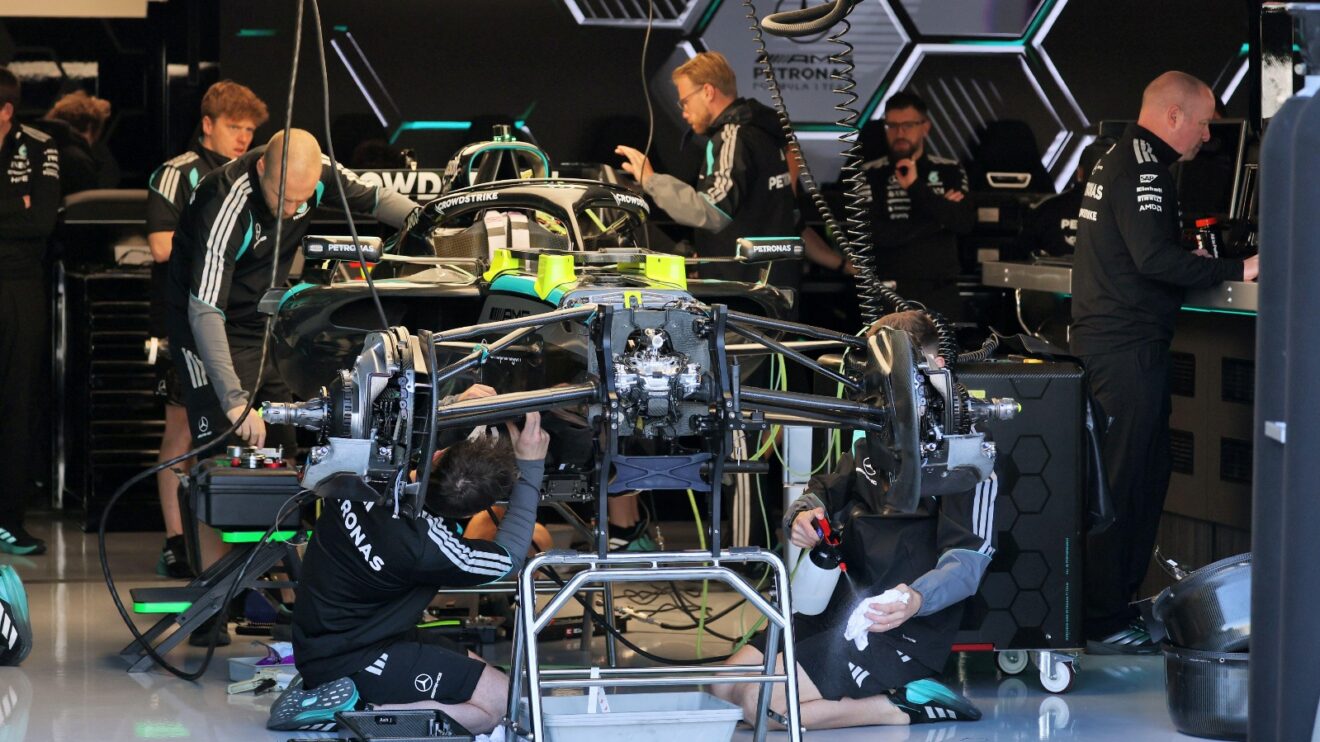
Mercedes first upgrade packing of the season is here.
The upgrades for the Canadian Grand Prix have been revealed with all eyes on Mercedes, which brings its first major package of improvements of this season.
While most teams unveiled their changes at the Miami Grand Prix, Mercedes held off until this weekend with eight alterations on the W17.
Upgrades revealed for the Canadian Grand Prix
McLaren
McLaren has made seven changes to its car with just one being circuit-specific.
A new front wing has been brought and is aimed at better flow conditioning across the operating range, resulting in improved aerodynamic load delivery.
A revised bodywork package features additional cooling exits aimed at improved aerodynamic flow conditioning towards the rear of the car.
As part of the new bodywork package, multiple cooling louvre options are available to cover the full range of ambient temperatures expected at this and future events.
On the halo, a new winglet has been fitted on the top, aimed at improving management of aerodynamic flow around the cockpit and central engine cover.
The rear wing endplate has been modified to change load distribution and increase local aerodynamic load.
The rear suspension fairings have been revised which is aimed at improving aerodynamic flow conditioning and load generation around the rear corner and diffuser.
The final change is on the floor edge which has been revised to improve overall floor conditioning and aerodynamic load generation on the floor and diffuser.
Mercedes
Mercedes’ changes come all over the car with just one of them being circuit-specific.
The Silver Arrows have made two changes to the front wing with the outboard elements dropped in height and run into the footplate. This results in more robust flow structures, improving flow to the rear of the car and gaining downforce.
On the front corner, the caketin upper lip camber has been reduced to improve flow structure robustness throughout the operating envelope which improves the onset flow to the rear wing.
A circuit-specific change is the increased inlet due to the high braking demands of Montreal.
Three changes come on the floor with reprofiled elements on the board, additional slots on the corner and a reprofiled floor roof. These help to increase local load and improve flow into the diffuser.
The rear corner has seen the chord and position of the rear caketin winglets re-optimised to improve local flow control and performance of the diffuser.
Red Bull Racing
Red Bull makes four changes to its car ahead of the Canadian race.
On the front wing, revised wing flap elements are there to shift the aerobalance range available for the upcoming circuits.
The front corner has a revised brake duct exit geometry for the next two races, which demand more brake cooling.
The floor has a new bib edge trim and revised forward floor devices to mildly increase camber, resulting in the local load increasing.
Red Bull has also looked at the forecast and fitted a closed radiator exit panel with the louvre steps necessary for the race in Miami now shut.
Williams
Just three upgrades for Williams.
The first is circuit-specific and a new FBD geometry will be introduced, which offers an increased level of overall brake system cooling for the Canada race.
On the front suspension, revised cladding surfaces will be available to improve the local interactions on the front corner and hence downstream across the rest of the car.
The final upgrade comes on the exhaust tailpipe which has been repositioned to follow on from an update introduced at the previous Miami GP. This offers an improved coupling with the surrounding aerodynamic components.
Racing Bulls
Racing Bulls make four changes, the first of which comes on the floor with new geometry. This results in an efficient downforce increase generated by the underbody of the car, across a range of operating conditions.
At the rear corner, devices have been reprofiled in conjunction with the floor update to improve flow management at the back of the car.
Profile and incidence modifications have been made to the beam wing to extract additional load from the rear wing assembly.
On the exhaust, the reprofiled bracket improves the flow management around the centreline of the car as part of the surrounding changes on the beam wing and floor.
More news from Montreal on PlanetF1.com
Lewis Hamilton tells critics ‘get used to it’ as F1 retirement decision made
‘Next’ Max Verstappen challenge proposed as ‘high risk’ comments resurface
Haas
The American team has made five changes to its car.
A revised sidepod inlet and an undercut and top downwash on the coke/engine cover enable a more pronounced undercut along the lower surfaces, which, combined with increased top-surface downwash, channels higher-energy airflow towards the rear of the car, allowing the bespoke floor design to operate more efficiently.
The floor has revised geometry with new floor board, new floor edge splits and a more aggressive diffuser promoting up- and side-wash to promote more efficient extraction and overall load generation.
At the back, the suspension has an optimised fairing design enabling improved flow conditioning in this region and extracting additional performance from the overall package.
On the corner, there is revised winglet geometry on the inboard drum face to maintain their aerodynamic effectiveness and ensure consistent performance within the updated overall flow conditions.
Audi
Audi has made four changes in total, starting with the front corner which has a new brake duct design. This offers increased brake system cooling flow for the big braking zones of this specific track.
The front diffuser has been updated with a further evolution of its shape aiming to increase aero load efficiently at the rear end.
There are new sidepod louvres which can be fitted for more efficient cooling options.
The rear corner also has a new brake design for Montreal which offers increased cooling.
Alpine
Just the two changes for Alpine.
On the floor, there is a new geometry added with the objective of increasing aerodynamic performance and efficiency across all operating conditions.
On the rear wing, geometrical adjustments to the part brought in Miami are introduced at this event.
Cadillac
Cadillac also made two changes.
The first is on the front corner with an updated leading edge lip, brake duct internals and exit geometry. This improves overall aerodynamic loading, whilst internal duct and exit geometry revisions increase brake cooling capacity.
On the diffuser, the winglet lower trim and hanger details have been revised to increase local aerodynamic load at the rear of the car.
Ferrari and Aston Martin have brought no upgrades.
Read next: FIA cuts Canada qualifying energy limit to new season-low in Montreal