

Bearman explains why Haas rejected Ferrari’s ‘heavy’ rear wing gamble
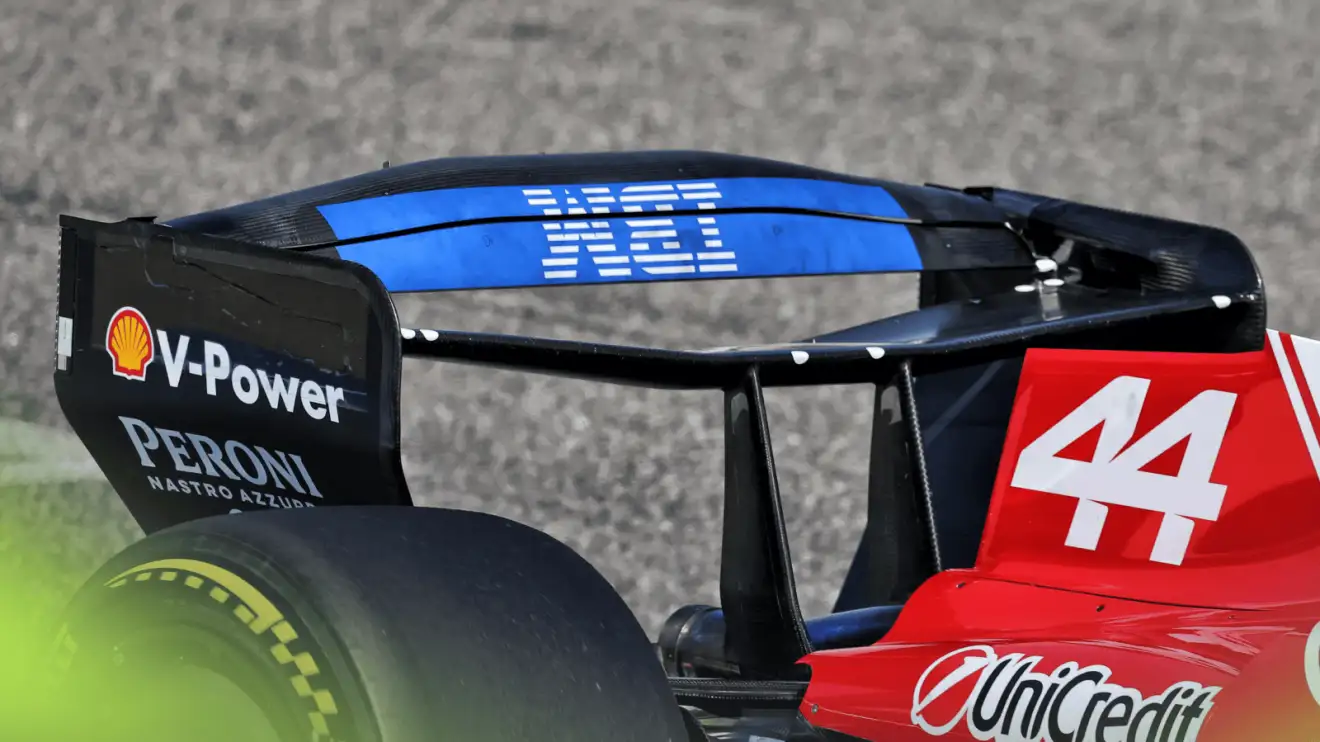
Ferrari introduced an innovative active aero rear wing in Bahrain testing
Oliver Bearman has revealed Haas considered Ferrari’s radical rear wing design but opted not to go down that route as it was “heavy”.
Ferrari raised eyebrows in the paddock during the final Bahrain test when the Scuderia introduced innovative parts for the SF-26.
Oliver Bearman details Haas decision on Ferrari rear wing
Want more PlanetF1.com coverage? Add us as a preferred source on Google to your favourites list for news you can trust
Hitting the track on Wednesday with a small wing close to the exhaust, which is understood to improve the car’s downforce, Ferrari arrived on Thursday with a new movable rear wing.
This season Formula 1 has incorporated active aerodynamics, with both the front and rear wing able to move.
But rather than opening like the previous DRS flap in yesteryear’s car – a design chosen by most teams – Ferrari’s design sees the upper elements of the rear wing rotate when the drivers activate the new straight-line mode.
Audi and Alpine are the only other teams to come up with something different for the rear wing, but Ferrari’s design is unique on the F1 2026 grid.
Lewis Hamilton ran the new wing for five laps before Ferrari reverted to the older spec for the afternoon session and the final day of testing.
Matt Somerfield tech analysis: Innovative Ferrari SF-26 upgrades
Ferrari unveils radical exhaust flap ahead of F1 2026 aero fight
F1 Testing: Ferrari unveils radical rotating active rear wing
Team principal Fred Vasseur told PlanetF1.com and other media outlets that the Scuderia had yet to decide which of the two wings would be on the SF-26 come the season-opening Australian Grand Prix.
“I think everybody is doing innovation. Sometimes it’s visible, sometimes it’s not,” he said. “I’m sure that our competitors and everybody on the grid is doing exactly the same.
“It’s true that the last two bits that we bought on track were visible from outside, but it’s not a big difference with the others.
“I don’t know if it will be for Melbourne or for the next one [in China].”
However, should Ferrari run the wing and taste success, don’t expect rivals to immediately jump on the design as Bearman says Haas did consider it, but it is heavy.
This year’s cars have a minimum weight of 768kg, some 32 lighter than last season. This comes despite the hefty battery needed to accommodate the new 50/50 split of internal combustion power and electrical energy. The cars may be smaller and shorter, with reduced wheelbases, but the battery has taken up a lot of the lost weight.
There is speculation in the paddock that some teams are struggling to go get down to the minimum weight.
“Yeah, I saw it, and it looks cool, but it is heavy as well,” Bearman said in Bahrain of Ferrari’s rear wing.
“I think everyone has considered it, including ourselves, but there is always a compromise to be made on these things.
“I was actually behind Lewis, and I saw it, and I was like: ‘What happened?’
“I thought it was broken, but honestly, it is super innovative, and it looks pretty slick as well.
“So if it works on track, then they’ve done something right, that’s for sure.”
Want to be the first to know exclusive information from the F1 paddock? Join our broadcast channel on WhatsApp to get the scoop on the latest developments from our team of accredited journalists.
You can also subscribe to the PlanetF1 YouTube channel for exclusive features, hear from our paddock journalists with stories from the heart of Formula 1 and much more!
Read next: Alex Albon makes bold Lewis Hamilton call for F1 2026