

Renault’s historic F1 engine factory faces uncertain future after major decision


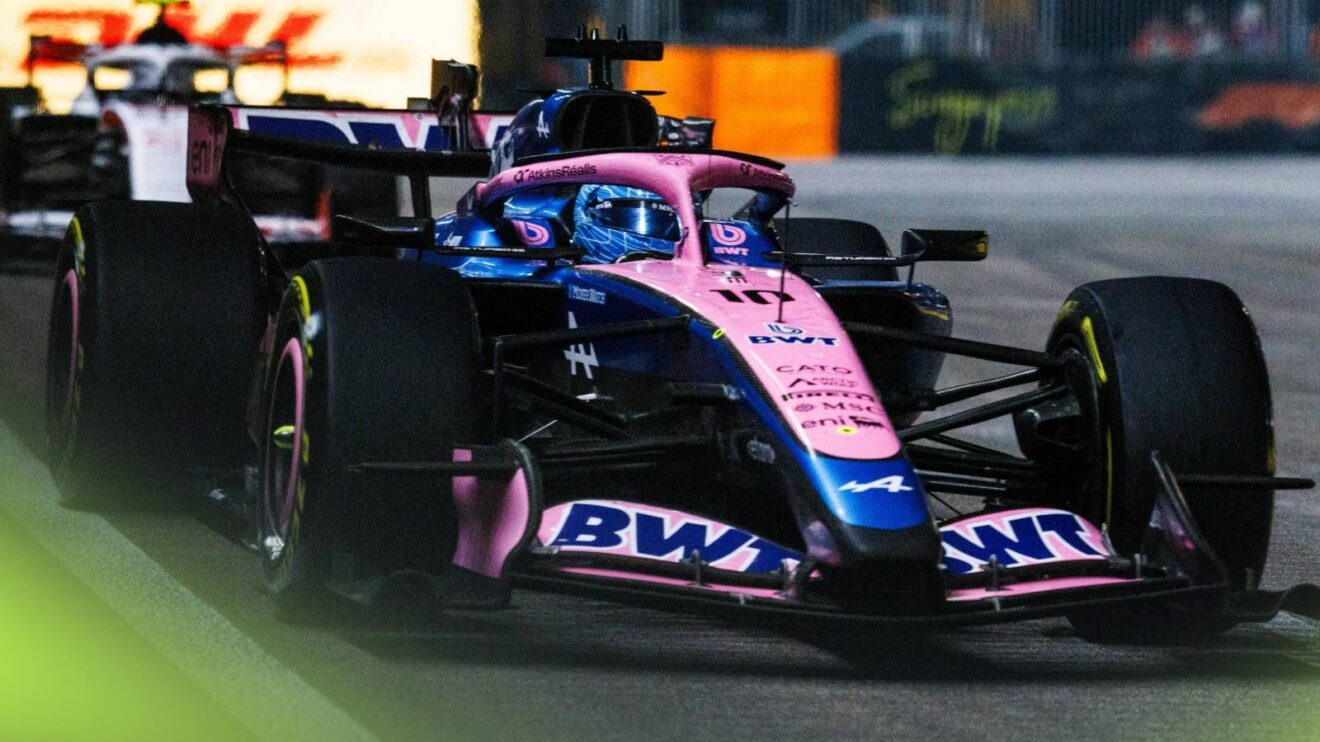
Renault's former F1 engine factory is set to be sold, with the aim of saving circa 150 jobs.
Renault’s Viry-Chatillon facility, which long housed its power unit operations, is to be sold to a Belgian engineering group, with the aim of preserving circa 150 jobs.
The proposed deal will transfer the Viry-Chatillon facility and around 150 jobs to the Dumarey Group, marking the closing of a long and successful chapter in Renault’s history.
Renault F1 engine factory set for sale after 2026 project abandoned
Alpine is set to sell its historic Formula 1 engine factory at Viry-Chatillon in France to Belgian engineering group Dumarey Group, securing a future for the facility after Renault abandoned its planned 2026 power unit and ended its works engine programme two years ago; a long-anticipated outcome given the wind-up of operations on the engine side.
On Thursday, it was announced that the proposed transaction will see Dumarey acquire Alpine Racing SAS – a separate entity to that of the Alpine F1 team operating out of Enstone in England – including its engineering teams and the tangible and intangible assets required to operate the site. The sale does not include any of the assets pertaining to the F1 team.
The process for the sale has commenced, with an initial agreement reached between Dumarey and the Renault Group.
All employees of the business will transfer to the new owner if the deal is completed, with approximately 150 jobs expected to be preserved. The financial terms of the agreement have not been disclosed.
The sale represents a significant change of direction for the Viry-Chatillon operation, which previously supplied Formula 1 engines for more than four decades.
Renault had previously planned to transform the site into a wider engineering and innovation centre under the Hypertech Alpine name, following its decision to withdraw from manufacturing F1 power units after the 2025 season.
Dumarey now intends to retain the facility’s specialist expertise while expanding its engineering activities into motorsport and other industrial sectors.
The agreement was presented to employee representatives at an extraordinary Works Council meeting on Thursday, 22 October. Completion remains subject to the legally required consultation process and the necessary regulatory approvals.
Renault’s abandoned 2026 engine project
The proposed sale follows Renault’s decision, confirmed in September 2024 and extensively covered by PlanetF1.com, to stop development of its planned 2026 Formula 1 power unit and move Alpine to a customer engine supply arrangement.
The decision ended hopes that the Viry-Chatillon team would produce a new engine for Formula 1’s 2026 technical regulations, which introduced a greater emphasis on hybrid power and energy management.
The announcement prompted opposition from employees, who argued that abandoning the project risked undermining the site’s technical reputation, French motorsport heritage and ability to retain experienced engineers.
Staff had been developing the new power unit and believed the project was progressing towards its targets, according to PlanetF1’s reporting at the time.
Renault’s original alternative was to transform the factory into Hypertech Alpine, a development centre supporting high-performance vehicles and advanced technologies for Alpine and the wider Renault Group.
Plans outlined in 2024 included work on an Alpine supercar, high-energy-density and solid-state batteries, electric vehicle technologies, and motorsport programmes spanning endurance racing, Formula E, rallying and customer competition.
An F1 monitoring unit was also envisaged to preserve employees’ knowledge of the sport and maintain links with Formula 1 innovation, despite the cancellation of the new engine programme.
The Dumarey agreement now offers a different ownership structure for the Viry-Chatillon operation, transferring the business and its workforce to an independent industrial group rather than retaining the entity under Renault Group ownership.
Preserving the factory’s engineering expertise
Located south of Paris in the Île-de-France region, Viry-Chatillon has more than 40 years of Formula 1 development experience.
During its time as an F1 power unit manufacturer, Renault engines won a total of 23 titles: 12 Constructors’ Championships and 11 Drivers’ Championships.
It won 169 races, the most recent of which was Esteban Ocon’s 2021 Hungarian Grand Prix victory, but this tally has come to a definitive close with the cessation of activities at Viry-Chatillon.
But the factory and its capabilities extend beyond combustion engines to include hybrid and electric propulsion, simulation, software and advanced testing.
The companies say the acquisition is intended to secure the long-term sustainability of the site’s activities while preserving employment and maintaining its technical capabilities.
Dumarey also sees opportunities to apply the team’s high-performance engine expertise to work with racing teams in the future, potentially giving the facility new commercial opportunities beyond its previous role in Renault’s F1 programme.
“We see considerable potential in combining its highly skilled teams and technical capabilities with Dumarey’s entrepreneurial culture and diversified industrial footprint,” Guido Dumarey, chairman and founder of Dumarey Group, said about the factory.
“Our ambition is to preserve and further develop this exceptional engineering expertise while creating new opportunities for growth.”
Axel Plasse, vice-president of Alpine Tech, said the transaction offered an opportunity to secure and develop the facility’s expertise while creating new prospects for employees and the engineering business.
More on Alpine in F1
Alpine’s ownership picture could be about to change after key date passes
Who owns each Formula 1 team?
Dumarey targets motorsport expansion
Founded in 1983 by Guido Dumarey, the family-owned group specialises in advanced engineering services, systems and components for the automotive and industrial sectors.
Its technologies include vehicle powertrains, control systems, dual-fuel hydrogen engines and energy storage solutions. The company works with vehicle manufacturers and industrial organisations from initial design through to industrialisation and production.
Dumarey operates across 11 locations in Europe, the Americas and Asia, employing approximately 2,500 people and generating around €750 million in annual revenue.
The acquisition would expand its expertise in high-performance powertrain development, electrification and advanced testing. Dumarey believes these capabilities could support innovation across automotive, aerospace and industrial applications.
The company has not yet announced specific investment commitments, customer programmes or a detailed operating plan for the factory. Its immediate priority is to maintain the facility’s engineering capabilities and retain its workforce while developing new business opportunities.
Alpine retains its F1 team
The sale of the Viry-Chatillon operation does not mean Renault is withdrawing Alpine from Formula 1. although its exact ownership structure is currently up in the air as investment group, Otro Capital, is seeking to sell its 24 per cent stake in the squad.
The Renault Group retains the Alpine F1 team as the majority shareholder, and has moved away from producing its own power units in favour of purchasing engines from Mercedes for the 2026 season as it has switched from being a full-blooded manufacturer squad into a customer team.
After Renault’s decision to abandon its 2026 engine, the former F1 engine factory’s future will now depend on Dumarey’s ability to turn its decades of Formula 1 expertise into a sustainable business beyond its former role as a works supplier.
Read Next: Honda admits new turbocharger failed to solve Aston Martin’s Singapore struggles