

What if the Honda PU rains on Adrian Newey’s parade?
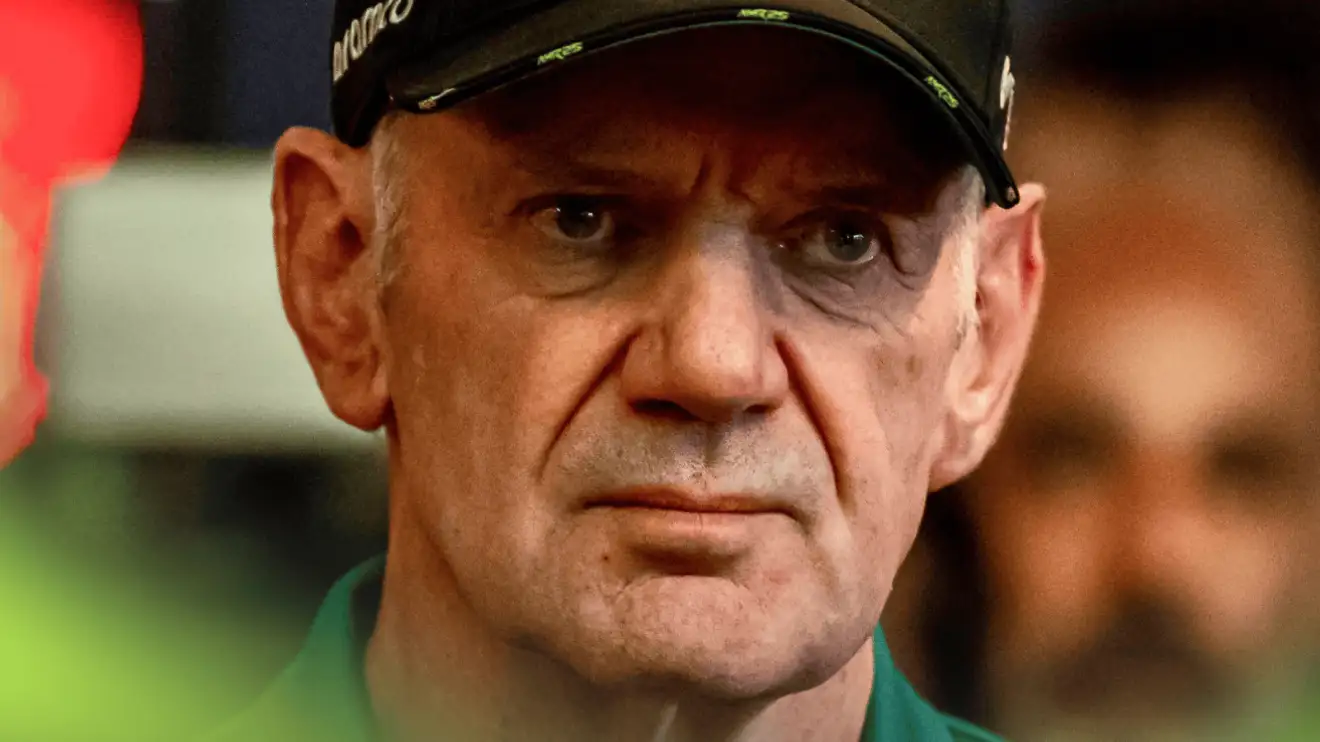
Aston Martin team principal Adrian Newey in the paddock at the 2025 Qatar Grand Prix
The first sighting of the AMR26, the first Aston Martin F1 car to be designed by Adrian Newey, made for one of the great Formula 1 moments at the Barcelona F1 2026 shakedown.
But will the Honda power unit be a match for Newey’s latest masterpiece? That question could ultimately determine what 2026 holds for the green machine.
Adrian Newey and Aston Martin need the Honda PU to perform
Want more PlanetF1.com coverage? Add us as a preferred source on Google to your favourites list for news you can trust
A version of this article originally appeared in PlanetF1.com’s conclusions from the Barcelona shakedown
Fernando Alonso had waited all his life to drive a Formula 1 car designed by Adrian Newey, so a few extra days would not hurt.
After PlanetF1.com revealed on January 23 that Aston Martin would miss the start of testing, the AMR26 did not take to the track until the final hour of the penultimate day in Barcelona.
When it finally did break cover, it made for one of those great and all-too-rare Formula 1 moments when the sport’s collective jaw drops to the floor.
So different to any other car out there, such a range of ideas thrown at a single canvas, so many little details catching the eye the deeper it is examined.
It has become a cliché in this business to describe a racing car as a work of art.
Only with Newey, the patron saint of the pencil and drawing board, does it still ring true.
In his in-depth technical analysis of the Aston Martin, PlanetF1.com technical editor Matt Somerfield likened the “shock factor” of the Aston Martin sidepods to the first sighting of Mercedes’ zero-pod concept in 2022.
Matt Somerfield tech analysis: Aston Martin AMR26 steals the show
Adrian Newey masterclass revealed as Aston Martin AMR26 dissected
Aston Martin AMR26: What we’re hearing about Adrian Newey’s first Aston Martin
So unique is the AMR26 compared to the rest of the field that it offers hope that Newey – who spoke last year of the new rules containing more scope for interpretation and innovation than first thought – has once again found something the rest have missed.
Still there is hope that this car might finally be the one to bring Alonso’s 33rd F1 win and – who knows? – potentially a third world championship too.
Yet the great unanswered question surrounding this car and its prospects for the new season – one impossible to answer after barely 24 hours of running, none of it meaningful or representative – concerns the Honda engine.
Despite its recent success with Red Bull and Max Verstappen, it is important to remember that Honda is effectively returning to F1 this year after withdrawing from the sport at the end of 2021.
Honda’s U-turn – announcing its partnership with Aston Martin in May 2023 – almost certainly came at a cost to its preparations for 2026 in terms of development, resource and manpower.
Koji Watanabe, the president of the Honda Racing Corporation, recently downplayed expectations for the 2026 engine, telling Japanese outlet Sportiva that “there are many areas where we are struggling.”
The good news at least?
“Nothing fatal has happened that we cannot overcome.”
Perhaps the biggest question hanging over Aston Martin in 2026, then, is whether Newey’s latest masterpiece will be enough to mask the seemingly inevitable shortcomings on the Honda side.
And whether Honda – with the possible assistance of the FIA’s Assisted Development and Upgrade Opportunities (ADUO) scheme, a safety net set up last year to help struggling manufacturers catch up in 2026 – can sufficiently close the gap to give Alonso a fighting chance.
No doubt the warmer temperatures of Bahrain next week will paint a clearer picture of what exactly Aston Martin has to work with.
Adrian Newey explains why the Aston Martin AMR26 was late to Barcelona testing
PlanetF1.com revealed on January 23 that Aston Martin was poised to miss the start of pre-season testing in Barcelona.
The team confirmed the news three days later, as well as detailing its plan to appear only on the final two days of running – meaning Aston Martin would only carry out two of its permitted three days of running in Spain.
The AMR26 finally broke cover in the final hour of the penultimate day with Lance Stroll completing five laps – and bringing out a late red flag due to a suspected electrical issue – before handing over to Fernando Alonso for the final day.
Alonso added 49 laps to Aston Martin’s tally, none of which were representative. His quickest lap was 4.447 seconds slower than the fastest time of the entire test, set by Lewis Hamilton’s Ferrari in the closing stages.
Alonso’s car was also spotted with a flashing blue light at the rear, a signal usually reserved for drivers still lacking an F1 superlicence.
Yet in the case of Alonso – hardly a first timer with his 45th birthday on the horizon – the blue light was reportedly used to alert other drivers that the Aston Martin AMR26 was not travelling at full speed on the straights during some runs.
Might that be a sign that the Honda engine must be managed with extreme care in these early days of 2026?
In an interview with the Aston Martin F1 team’s official website earlier this week, Newey explained that the team’s 2026 preparations were four months behind schedule.
Addressing the team’s delayed start to testing, he said: “2026 is probably the first time in the history of F1 that the power unit regulations and chassis regulations have changed at the same time.
“It’s a completely new set of rules, which is a big challenge for all the teams, but perhaps more so for us.
“The AMR Technology Campus is still evolving, the CoreWeave Wind Tunnel wasn’t on song until April and I only joined the team last March, so we’ve started from behind, in truth.
“It’s been a very compressed timescale and an extremely busy 10 months.
“The reality is that we didn’t get a model of the ’26 car into the wind tunnel until mid-April, whereas most, if not all of our rivals would have had a model in the wind tunnel from the moment the 2026 aero testing ban ended at the beginning of January last year.
“That put us on the back foot by about four months, which has meant a very, very compressed research and design cycle.
“The car only came together at the last minute, which is why we were fighting to make it to the Barcelona Shakedown.”
Want to be the first to know exclusive information from the F1 paddock? Join our broadcast channel on WhatsApp to get the scoop on the latest developments from our team of accredited journalists.
You can also subscribe to the PlanetF1 YouTube channel for exclusive features, hear from our paddock journalists with stories from the heart of Formula 1 and much more!
Read next: Adrian Newey: Aston Martin AMR26 will be ‘very different’ for Australian Grand Prix


