
Aston Martin explains why its upgrade gamble differs from Ferrari’s approach


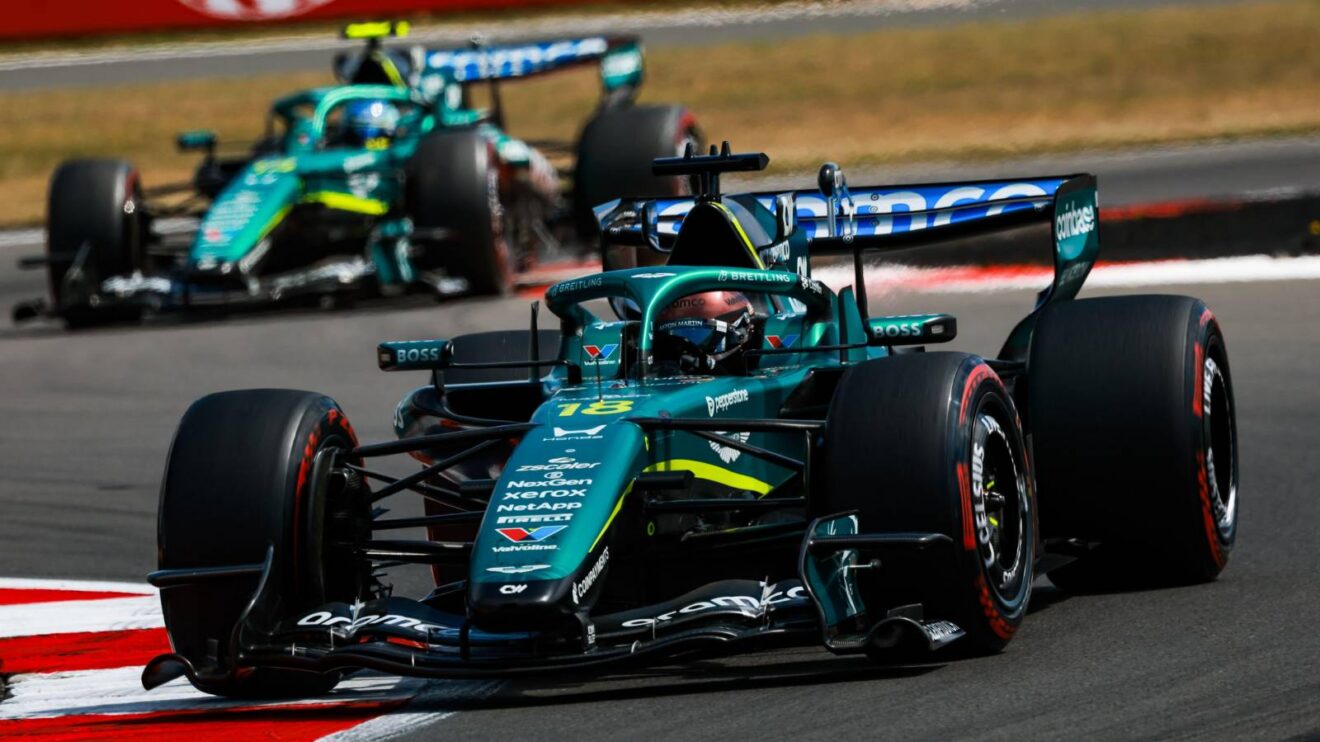
Lance Stroll and Fernando Alonso lay down the laps
Aston Martin insists its one-shot upgrade gamble is no different to Ferrari’s constant stream of updates, with Mike Krack comparing Formula 1’s cost cap to spending a fixed €100 budget at the supermarket.
Unlike Ferrari, which has been bringing upgrades almost every weekend, including two big packages in Miami and Barcelona, Aston Martin has held back, with team principal Adrian Newey favouring one massive change with a B-spec car expected to be on the track at the Hungarian Grand Prix.
Mike Krack explains Aston Martin’s Formula 1 upgrade strategy
Want more PlanetF1.com coverage? Add us as a preferred source on Google to your favourites list for news you can trust.
Formula 1’s radical overhaul of the regulations, coupled with Aston Martin’s new partnership with the championship-winning Honda power unit manufacturer, was widely tipped to bring Aston Martin into play this season. The partnership, though, has fallen short of expectations.
Although Honda’s vibration issues dominated the early headlines, Aston Martin has also struggled with gearbox issuesas well as an overall lack of downforce, while the chassis is also overweight.
With one solitary point in nine race weekends, Aston Martin is tenth in the constructors’ championship, only ahead of newcomers Cadillac.
Newey believes the team will turn its fortunes around with the Budapest package, which he is predicting will be a “large step” forward.
In a season in which the new cars are in their infancy, it is a notably different upgrade philosophy from the likes of Ferrari.
Aston Martin’s chief trackside officer explained to PlanetF1.com and other media, “It depends on the plan.
“At the end of the day, a decision was made, you will recall, that we will not bring race on race and race, and if their plan was different, then it was different.
“You must just not forget one thing; if you bring an upgrade every week, you have to plan this long in advance.
“You cannot say I was poor in Austria, and I have an upgrade in Silverstone the week after. So this is all following a plan that has taken a long time to do, where you factor everything in – logistics, production, technicalities of the circuit, and all that.
“So, at each team has a plan, and they work to their conditions.”
At a time when Mercedes’ team principal Toto Wolff declared that Ferrari “needs to be running out of money soon” given the sport’s cost cap, Krack says it is more a case of different teams having different philosophies.
This year the budget cap is set at $215 million, and when a team hits that, it can no longer develop the car. It could also find itself short on parts in the event of an accident.
But each team has to decide who it wants to spend its’ money at the supermarket.
“You go to the supermarket, and you have €100 in your pocket. You can only spend €100,” he explained about the cost cap. “If you get something for free, it is out of the hundreds. Yeah, so it’s the same.
“So you develop your car, if you have spent your 100, you cannot spend any more.
“So you need to see when you have everything, and then one thing you must not forget is you can have crashes, so you need to keep some margin to spend your 100 euro cleverly yet towards the end.
“So it is a consistent balance between development and cost of racing, basically.
“Then you try obviously, you know we have a lot of new people who are trying to do a lot better processes so the parts become cheaper, for example.
“Yeah, so this whole thing is permanently trying to optimise, so that you get much more for your €100s.”
But whether he likes the limit or not, it is the same for everyone.
“I do not want to argue if it’s needed or not. I think it’s the regulation.
“It’s like the car must weigh this, or the engine has to have this number of cylinders. It is the regulations that you accept, and then you have to do the best with them.
“In Formula 1, you need to be efficient with how you do your parts, how you manage everything. You have to work with not only the technical challenge or the sporting challenge, but you also have the financial challenge, and that’s part of Formula 1.”
Additional reporting by Thomas Maher
Want to be the first to know exclusive information from the F1 paddock? Join our broadcast channel on WhatsApp to get the scoop on the latest developments from our team of accredited journalists.
You can also subscribe to the PlanetF1 YouTube channel for exclusive features, hear from our paddock journalists with stories from the heart of Formula 1 and much more!
Read Next: Alonso sends ‘less power than F2’ warning on Belgian GP energy tactic