
Fernando Alonso says F1 lost ‘pure racing’ with hybrid engines


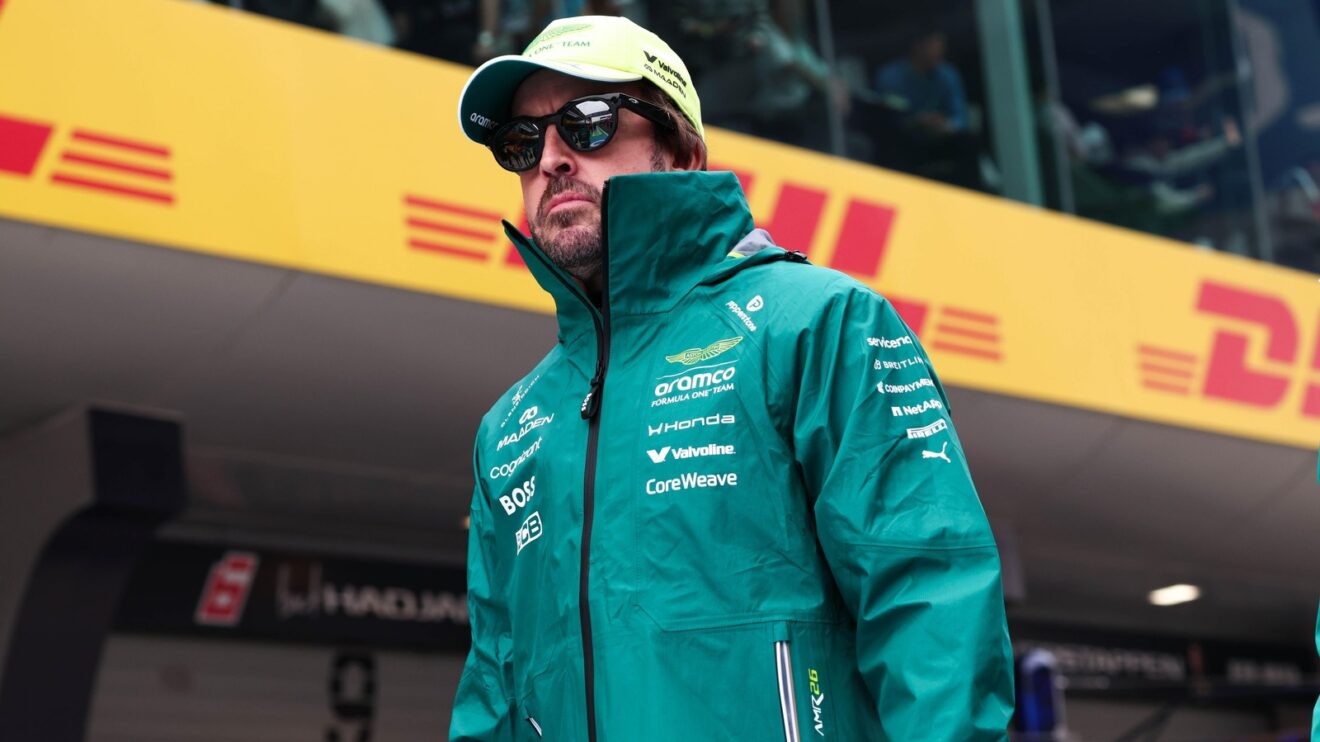
Fernando Alonso is critical of F1's push towards hybrid power.
Fernando Alonso believes Formula 1 sacrificed more than a decade of “pure racing” in its pursuit of hybrid power, as the FIA pushes to rein in the sport’s growing reliance on electrical energy.
The Spaniard’s comments come as the FIA looks to change the regulations for next season to reduce the electrical energy element.
Fernando Alonso questions hybrid era impact on Formula 1
Want more PlanetF1.com coverage? Add us as a preferred source on Google for news you can trust.
A troubled start to the all-new power unit regulations for F1 2026 has seen the sport exposed to heavy criticism from the drivers, fans, and media because of the unnatural driving requirements and jarring on-track action.
An increase in energy levels this year has brought with it a significant rise in driving techniques designed to recharge the battery.
That has seen drivers lifting and coasting more into braking zones, deliberately driving below the grip threshold in corners, while cars themselves will ‘super clip’ and transfer power from the combustion engine into the battery instead of the rear wheels.
Changes voted through in April were introduced for the Miami Grand Prix, though the impact of those remains unclear.
Chief among those tweaks, described as an evolution not a revolution, was the ability for the FIA to reduce the maximum harvesting amount per lap depending on the circuit.
Less than a week after Canada, the FIA issued a statement revealing an intention to overhaul the regulations for F1 2027 by increasing fuel flow and decreasing electrical power.
The intent is to bring the combustion-to-electrical power ratio back from a nearly 50-50 split to something closer to 60-40.
More importantly, it was a move seen by many as tacit acknowledgement that the current regulations are fundamentally flawed, if not unfit for purpose.
Alonso remains sceptical, implying that while it is a move in the right direction, the underlying concept driving the current engines is flawed.
More on F1 engine rules
FIA reveals rejected F1 2026 power cut proposal
FIA confirms changes to F1 2026 rules for Miami Grand Prix
“The DNA of these power units will be always the same, and it will always reward going slow in the corners,” he suggested.
The two-time world champion went on to suggest the sport’s misstep came when it moved towards hybrid power in 2014.
“I mean, they always listen,” Alonso said of the FIA’s response to the current issues.
“The thing that the world went, or thought, to go into the electrification, and that was thought to be the future… That doesn’t apply to racing.
“Racing is a different animal. Now we go a little bit back to this 60-40 and then in the future to less and less.
“Unfortunately, we have this period from 2014 with the turbo era, and now even more, that we lost a little bit, nearly one decade or even more, of pure racing.”
Although announced via an FIA statement following the Canadian Grand Prix, changes for the F1 2027 power units are not a done deal.
Because it’s not a safety issue, the proposal needs to be voted through by the Power Unit Advisory Committee, likely with input from the Technical Advisory Committee.
That will slow the process down as teams look to understand the impact of such a change.
It potentially means a significant redesign of their cars to accommodate a larger fuel cell among other weight distribution considerations, moving the proposal well beyond a simple power split refinement.
Want to be the first to know exclusive information from the F1 paddock? Join our broadcast channel on WhatsApp to get the scoop on the latest developments from our team of accredited journalists.
You can also subscribe to the PlanetF1 YouTube channel for exclusive features, hear from our paddock journalists with stories from the heart of Formula 1 and much more!
Read Next: Horner breaks cover with surprise new partnership before rumoured F1 return