
Ferrari Miami upgrade ‘disaster’ leaves team facing ‘soul-destroying’ setback


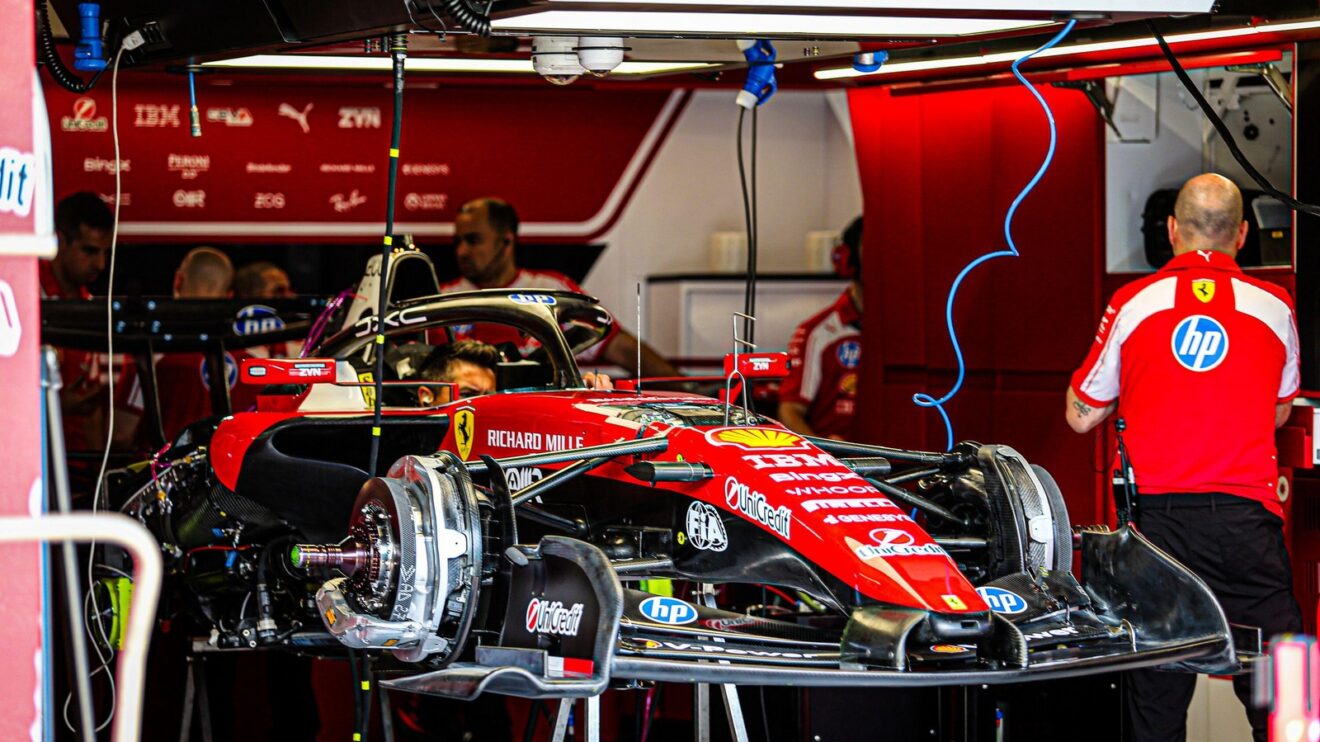
Ferrari brought 11 updates to Miami
Former Ferrari engineer Rob Smedley says Ferrari’s failed Miami upgrade blitz will be ‘soul-destroying’ for the Scuderia after 11 new parts failed to close the gap to Mercedes — and McLaren still came out ahead.
Now Ferrari’s technical team has to reverse engineer every one of those upgrades to establish which of the 11 didn’t work – and if it’s even just one.
Ferraris failed 11-part Miami upgrade sparks ‘soul-destroying’ warning
Want more PlanetF1.com coverage? Add us as a preferred source on Google to your favourites list for news you can trust
While Ferrari’s rivals opted to space out their updates, or in Mercedes’ case hold off until Canada, Ferrari went all in at the Miami Grand Prix as Formula 1 returned to the track after its unscheduled spring break.
Amongst the changes, the team introduced a new floor and diffuser, while also revising the ‘Macarena’ rear wing to improve drag reduction and focus on increasing load in cornering mode.
The weekend started strong with Charles Leclerc topping the timesheet in the extended FP1 by almost three-tenths ahead of Max Verstappen. But that was the team’s sole P1 of the weekend.
Although Leclerc finished the Sprint in third place, Ferrari was booted off the grand prix podium by McLaren, crossing the line fifth and seventh.
15 seconds down on Mercedes race winner George Russell at the opening race of the season in Australia, Leclerc was 40s behind Kimi Antonelli on the line in Miami. He was later penalised 20s for repeated off-track moments on the final lap.
Although Ferrari claims the updates were a step in the right direction, that step wasn’t big enough to take the fight to Mercedes.
F1 2026: The season’s winners and losers
The results of the F1 2026 championship
The F1 2026 Drivers’ and Constructors’ Championship standings
Jake Humphrey posed the question on the High Performance Racing podcast: “I think this upgrade game is interesting. Can I talk about Ferrari, the fact they brought 11 upgrades to Miami and didn’t look any closer to the fastest car? I wonder how that feels in a team when that goes on?”
Former Ferrari race engineer Smedley says the team will be gutted as it now has to reverse engineer the updates to figure out which part didn’t work as expected.
“It’s slightly soul-destroying,” he said.
“It starts from a technical point of view, it starts essentially this negative loop that you’ve then got to [dissect]. What did you bring? What’s working? What’s not working?
“If it’s not correlating, as in the wind tunnel or your simulation tools are not matching what’s on track, you’ve then got to do this whole reverse engineering process where you go back to the tunnel, and that holds up all of the development in the tunnel that you should be doing.
“It just…”
Alpine team principal Otmar Szafnauer picked up: “There are two things that happen. You have finite resources, and now you’re putting those resources on correlation, not making the car go faster. And the reason you’re doing that is because if you don’t have good correlation, it’s only luck that you make the car go faster, right?
“So you’ve got to fix that, if that’s what their issue is, first and foremost. But the same engineers who would be looking at on-track performance are now looking at correlation issues.
“There are some different teams that have different groups, but when I was at Aston, Racing Point and Force India, we had a pretty big APG group, which is an aeroperformance group, and they were the people who would look at correlation, mainly. Not so much development but correlation.
“When I went to Alpine, they had like three. That was one of the things I thought to myself as not being enough.
“If you’ve got perfect correlation, no problem. But if you wake up and you don’t and you only have three people in APG, you’re going to struggle.
“Then what happens is just what I described. You get your aerodynamicist looking at correlation, and now they’re not looking at making the car go faster. So it is a problem.”
Szafnauer revealed that prior to the track action in Miami, Mercedes’ trackside engineering director Andrew Shovlin had told him that the Brackley squad was wary of Ferrari’s challenge going into the weekend.
Szafnauer, though, was adamant it was always going to be McLaren who would be Mercedes’ biggest rival.
“I had a conversation with the chief engineer at Mercedes,” he explained. “This was on Friday, and I said, ‘you know Andrew’ – Andrew and I started the same day at British American Racing in 1998 in August, 98 so I know him well, we shared an office – I said, ‘I think you guys are going to win this championship, but McLaren are going to be your biggest challengers’.
“And he said, ‘I think you’re wrong’. He told me all the reasons. He said, ‘I think it’ll be Ferrari who are be our biggest challengers’.
“Maybe that’s because this was before we ran, and he saw the 11 upgrades.
“But as it turned out, I think McLaren soon will leapfrog Ferrari in the championship. They’re still behind, but they had a strong weekend McLaren. Strong car. Big upgrades.”
Mercedes, though, has yet to put its big upgraded package on the track with the team holding off on that until Canada.
“The other thing to note, from an upgrade perspective, Mercedes didn’t bring anything,” Szafnauer continued. “They’re bringing it to Canada. So let’s see what happens after Canada.”
Want to be the first to know exclusive information from the F1 paddock? Join our broadcast channel on WhatsApp to get the scoop on the latest developments from our team of accredited journalists.
You can also subscribe to the PlanetF1 YouTube channel for exclusive features, hear from our paddock journalists with stories from the heart of Formula 1 and much more!
Read next: Is FIA’s major F1 engine rules proposal the right move?