
FIA confirms major engine change after F1 2026 concerns


The FIA has made engine changes official for 2027.
The FIA World Motor Sport Council has officially approved rule changes to the F1 2027 power units regulations.
Having been provisionally agreed earlier in June, it is now official that there will be a move towards more internal combustion power, with a 58-42 split in 2027 followed by a 60-40 split in 2028, in favour of the ICE.
FIA WMSC officially ratifies F1 2027 power unit rule changes
Want more PlanetF1.com coverage? Add us as a preferred source on Google for news you can trust.
The 2026 season began with teams and drivers using all-new engines powered by fully sustainable fuels, but the start of the year so concerns raised about a rough 50-50 split between internal combustion and electrical power this year, with a new regulatory era starting in Formula 1.
Meetings between the F1 Commission and the Power Unit Advisory Committee had resulted in an agreement to move towards a 60-40 split in the coming seasons, to reduce the need to save battery and regenerate energy over the course of a lap.
Those changes have now officially been ratified by the WMSC, putting them into the FIA Technical Regulations from 2027 onwards.
In 2027, internal combustion power will increase by around 20kW [25bhp], with the maximum capability from the energy recovery system (ERS) reduced by 50kW [67bhp]. Maximum harvesting capabilities are also increasing by 25kW per lap, to reduce power units super-clipping – or losing energy at top speeds.
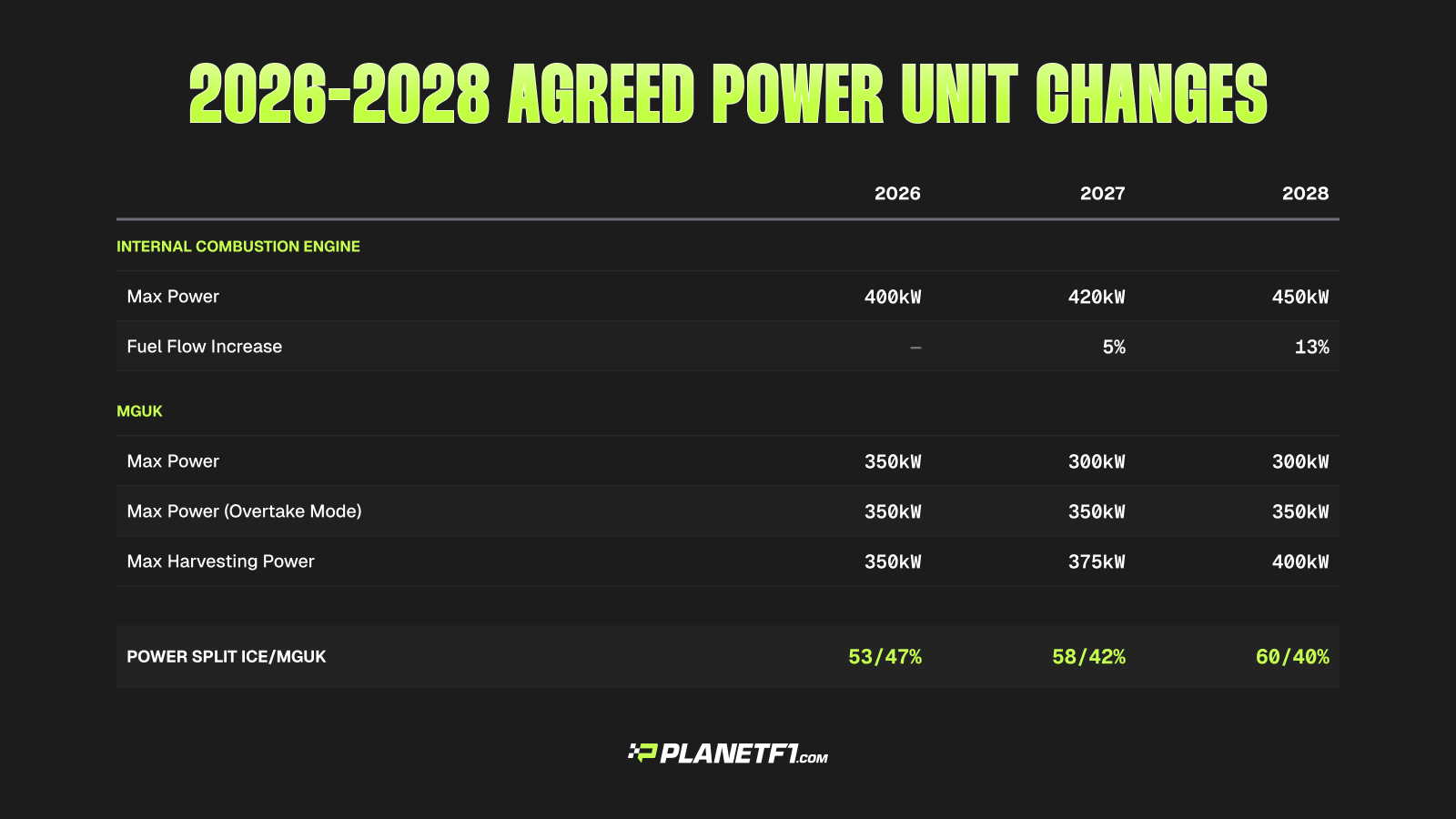
The fuel flow rate will also increase by 5% to compensate for the extra combustion power, with further changes such as slightly reducing race distances at certain circuits and the reduction of pre-race reconnaissance laps all a part of the new regulations, with fuel consumption more of a factor as a result.
In 2028, fuel flow will increase by 13% overall as power output from the ICE increases to 450kW overall [600bhp], while maximum harvesting power further increases by another 25kW per lap, with a 60-40 power split being achieved.
FIA President, Mohammed Ben Sulayem thanked those involved for the collaborative nature in which discussions took place, with further talks around future power unit concepts, including a possible return to V8 engines, also among the topics of talks.
More about the F1 2026 power units
Why F1 2026 power unit rules have delivered exactly what fans wanted
Explained: F1’s complex power unit upgrade system
“The FIA continues to oversee the evolution of the 2026 Regulations and work closely with all key stakeholders across the motorsport community,” he said.
“As with every major regulatory change, the process does not end when the cars first take to the track. Continuous dialogue and collaboration are essential to ensuring that the regulations meet the needs of the sport, its drivers, and its fans.
“Together we are exploring the future direction of the championship and considering how the sport can balance innovation, sustainability, performance and fan appeal in the years ahead.
“The discussions around future power unit concepts, including V8 engines powered by sustainable fuels, demonstrate the willingness of all parties to engage in shaping the next chapter of the sport.”
Want to be the first to know exclusive information from the F1 paddock? Join our broadcast channel on WhatsApp to get the scoop on the latest developments from our team of accredited journalists.
You can also subscribe to the PlanetF1 YouTube channel for exclusive features, hear from our paddock journalists with stories from the heart of Formula 1 and much more!
Read next: The five most dramatic Austrian Grand Prix moments: Title rivals collide and more