

Max Verstappen reveals true toll of F1 ground effect with 9G impacts
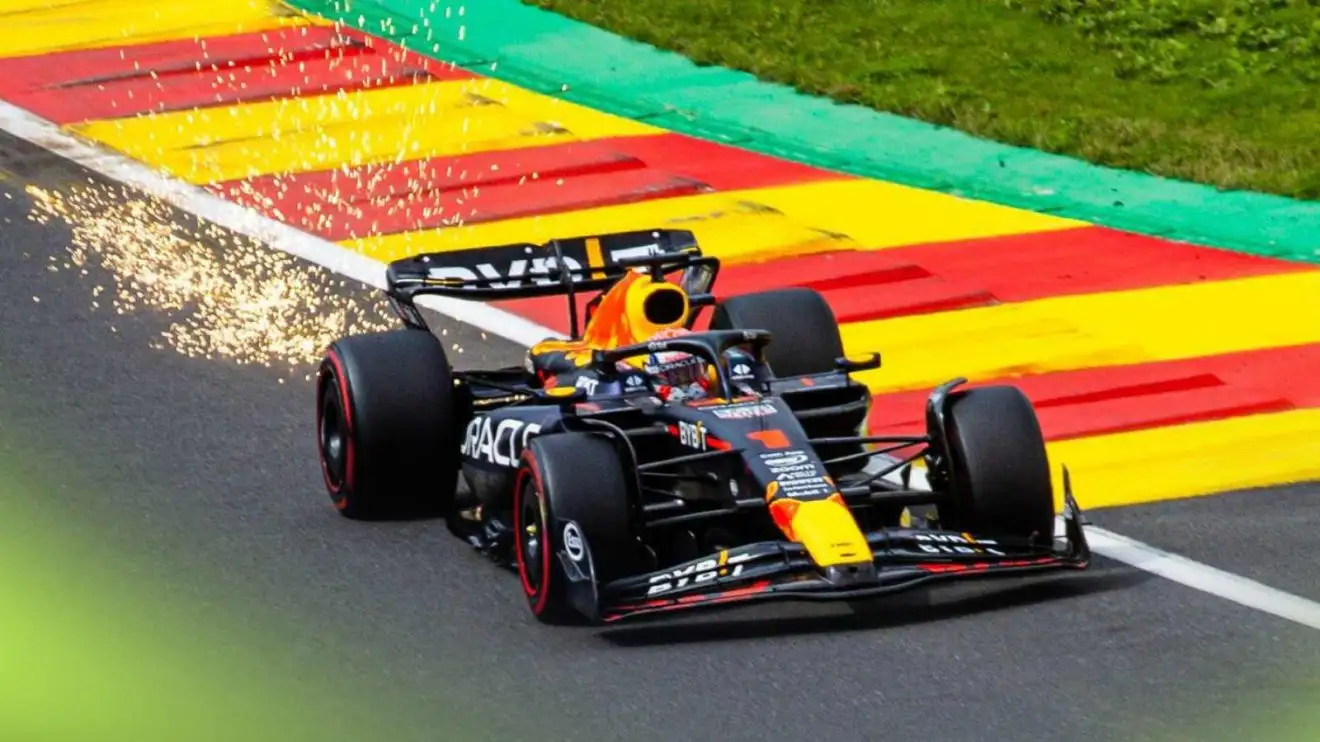
Cars creating sparks from hitting the track surface was common in the ground effect era.
Max Verstappen revealed the stiffness of F1 cars in the ground effect era led to significant bodily pressure, with vertical forces up to 9G on certain circuits.
The likes of Pierre Gasly and Oliver Bearman have spoken about the physical toll the drivers took in the previous generation of car, Gasly even explaining that continual impacts of such nature could have a career-shortening effect.
Max Verstappen reveals 9G vertical impacts in F1 ground effect era
Want more PlanetF1.com coverage? Add us as a preferred source on Google to your favourites list for news you can trust.
While the cars recently raced in Formula 1 are among the fastest ever built, the problem of cars bouncing due to the nature of the aerodynamics as downforce was generated underneath the cars proved problematic.
It took some teams longer than others to reduce the impact, the bouncing sensation also known as ‘porpoising’, but even Red Bull driver Verstappen – by far the most successful driver of the most recent era – had his struggles physically.
That was pronounced further on the bumpier circuits on the calendar, with Verstappen reporting that impacts up to nine times the force of gravity – almost double the highest physical demand during steering in high-speed corners – would hit.
More on the F1 2026 campaign
F1 driver contracts: What is the contract status of every driver on the F1 2026 grid?
The ultimate F1 2026 guide: Everything you need to know about the 2026 season
When asked what he will miss least in a fan question submitted to Red Bull’s in-house Talking Bull podcast, Verstappen replied: “The stiffness of the cars.
“You had to run them, of course, very low to the ground, and for our backs and everything, it was quite tough.
“Cornering [was] five-and-a-half G on average, but in some tracks, because it was a bit bumpy or whatever, and then the car’s being so low to the ground, you bottom out so aggressive that, for example, in Austin, I would hit, like, 9G vertical load.
“So, that is really not nice for your spine and your neck. Everything was always, like, blocked – and we trained for it, and I know it’s part of racing, but that, for me, it’s a little bit too extreme.”
Verstappen took 51 race victories on his way to three consecutive titles in the ground effect era, missing out on a fifth championship overall by a narrow two-point margin to Lando Norris in the finale in Abu Dhabi.
Want to be the first to know exclusive information from the F1 paddock? Join our broadcast channel on WhatsApp to get the scoop on the latest developments from our team of accredited journalists.
You can also subscribe to the PlanetF1 YouTube channel for exclusive features, hear from our paddock journalists with stories from the heart of Formula 1 and much more!
Read next: Ferrari under no illusions after missing targets in F1 2025


