
Jacques Villeneuve spills the beans on Williams ‘little tricks’ of yesteryear


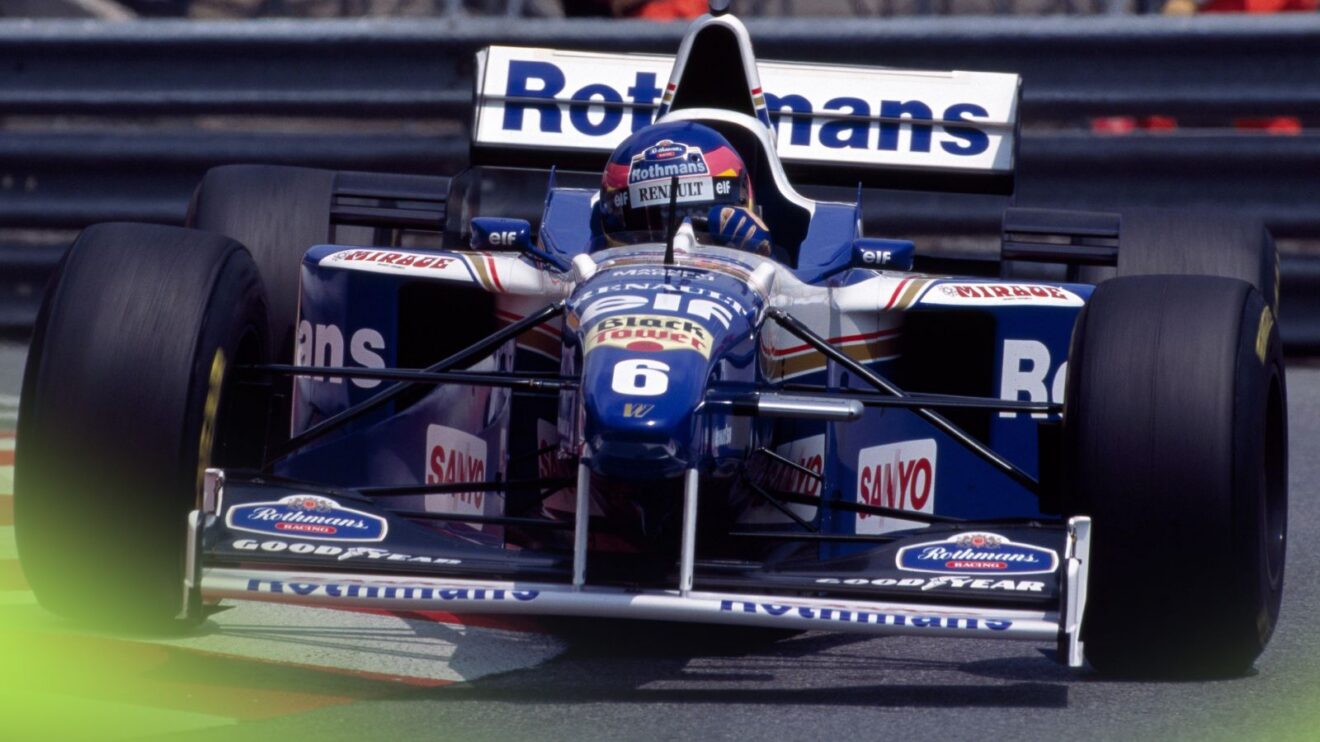
Jacques Villeneuve in action for Williams
Jacques Villeneuve offered a fascinating insight into the “little tricks” which Williams put on the car at his request, after swapping IndyCar for Formula 1.
Such tricks included Villeneuve being the only driver to use just one paddle for shifting. Using his race engineer as a traffic spotter at the start was also on the list as Villeneuve lifted the lid.
Jacques Villeneuve reveals his Williams ‘little tricks’
Want more PlanetF1.com coverage? Add us as a preferred source on Google to your favourites list for news you can trust.
Fresh off winning the IndyCar title, Villeneuve moved across the pond to Formula 1 and joined Williams from 1996. The following year, he became Formula 1 world champion.
In a recent appearance on the Beyond the Grid podcast, Villeneuve recalled some of his tricks of the trade.
Villeneuve confirmed that he did use a very short throttle travel.
“20 or 18 millimetres, depending on the season, at the toes.”
Villeneuve likened the throttle pedal to a computer mouse, claiming that “when it’s a small movement, you get there very quickly and precisely, and it’s the same thing with a pedal.
“When it’s short, it’s down to how much pressure you apply, more than how much you move. And you don’t have to move your whole leg. You just move your foot a little bit, so you have more control.”
That is not where the cockpit quirks ended for Villeneuve.
“The other thing we had differently was I only had one paddle shift, instead of two, and it was the same paddle to upshift and downshift.
“I would just push it to upshift, and then pull it down to downshift.
“That allowed me to not remove my hand from the wheel to go grab it, so you could actually shift while you were cornering at high G-force, or to react quickly if you got wheelspin.”
Villeneuve said that “nobody” else on the grid followed his one-paddle approach.
But wait, there was more.
“We had a lot of little tricks like that that we kept thinking of,” Villeneuve continued. “Like flags on the pedals. We were the first ones to do that, to hold the legs so they don’t move.
“Because I said, ‘Listen, I’m spending half my energy holding my leg instead of driving.’ So we put this in. It helped. It also saved you from breaking your foot if you crash.
“So there were a lot of little things. Grips on the steering. Adjustable front wings. This is stuff I had brought from IndyCar.
“And also radio communication. Jock [Clear, Villenueve’s former race engineer] would often, at the start, be like a spotter into turn one, watching the TV and telling me where the traffic was in real time.
“This is all the baggage I’d brought from the States.”
More on Williams from PlanetF1.com
Watch: Will Carlos Sainz stick or twist in F1 2027 season?
Carlos Sainz: Williams’ 2026 reality has been ‘an eye-opener’
Asked how many of these features were put in place before his 1996 Australian Grand Prix debut, Villeneuve clarified: “The paddle shift, that happened later.
“It was gradual. But anything in the comfort and pedal flags and all that, with 9000 kilometres, you have time to figure it out.
“Williams was very quick at reacting, which was fantastic.”
After three seasons with Williams, Villeneuve switched to BAR/Honda, before stints with Renault, Sauber/BMW Sauber. He made his final start at the 2006 German Grand Prix.
Want to be the first to know exclusive information from the F1 paddock? Join our broadcast channel on WhatsApp to get the scoop on the latest developments from our team of accredited journalists.
You can also subscribe to the PlanetF1 YouTube channel for exclusive features, hear from our paddock journalists with stories from the heart of Formula 1 and much more!
Read next: Stefano Domenicali confirms German Grand Prix ‘definitely’ returning