
Lewis Hamilton pinpoints F1 2026 ‘weird feeling’ in V8 comparison


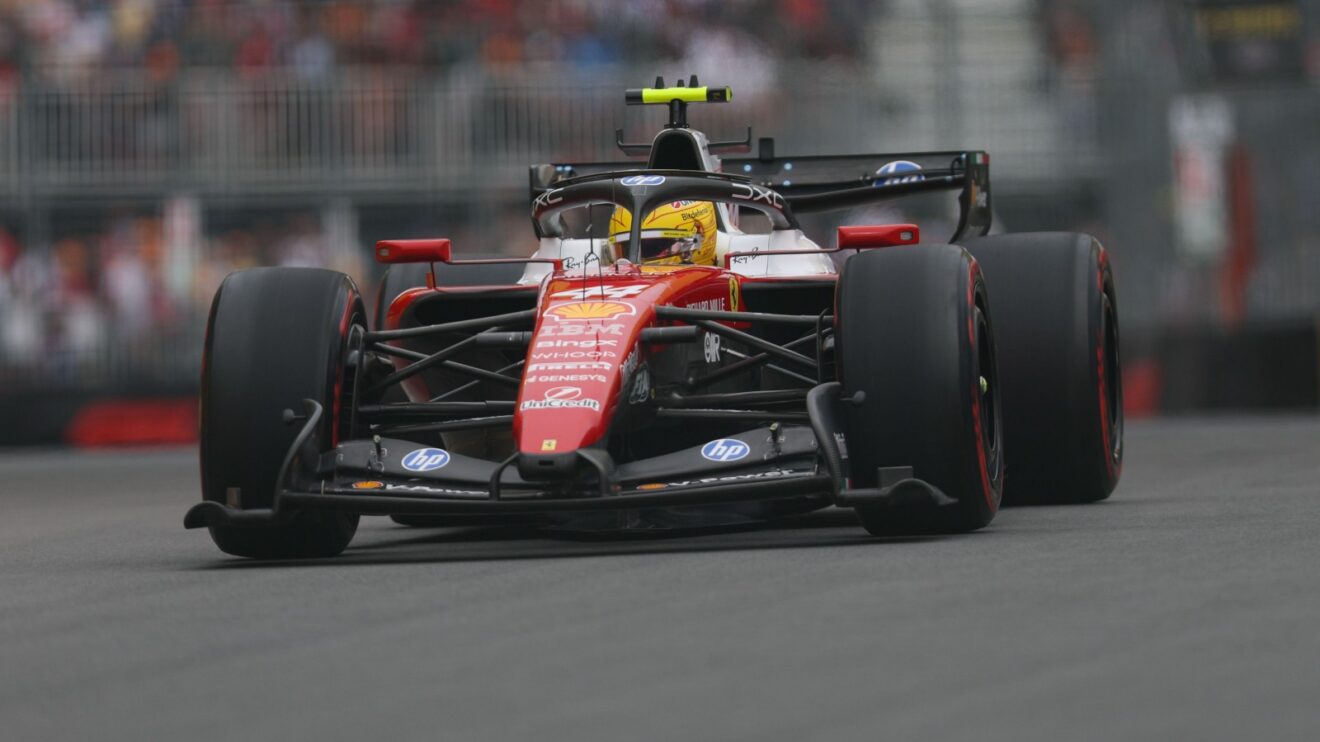
Lewis Hamilton in action at the wheel of the Ferrari SF-26
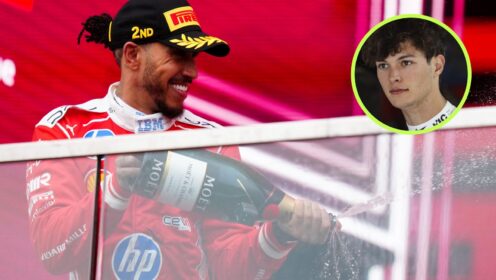
Lewis Hamilton, who emerged as an early supporter of the F1 2026 regulations, featured in a thrilling Canadian Grand Prix P2 battle alongside his former title rival Max Verstappen.
But, speaking after that particular victory, Hamilton offered an updated, mixed verdict on the F1 2026 rules. Hamilton is enjoying the following and closer racing, but says the power units do not “feel what motorsport should be” when the “power dies halfway down the straight,” something which Hamilton points out never happened with the V8 or V10 engines of old.
Lewis Hamilton delivers mixed verdict on F1 2026 rules
Want more PlanetF1.com coverage? Add us as a preferred source on Google to your favourites list for news you can trust.
The controversial new F1 ruleset delivered arguably the best race weekend yet in Montreal. With drivers limited to a season-low 6.0 MJ of recharge per lap, drivers looked closer to being back on the ragged edge during qualifying. There were overtakes aplenty in the Sprint and Grand Prix.
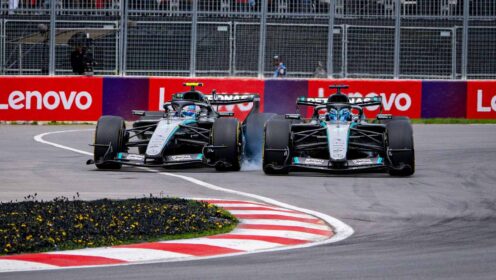
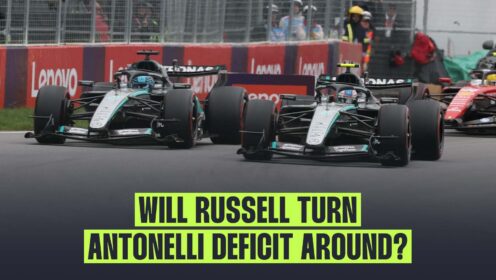
Mercedes teammates and title rivals George Russell and Kimi Antonelli put on thrilling Sprint/Grand Prix battles over P1.
Hamilton and Verstappen rolled back the years with a thrilling scrap, that over P2 when Russell was forced to retire due to a Mercedes battery issue. Hamilton came out on top, securing P2, that his best grand prix result yet with Ferrari.
After five rounds with this new formula, and various FIA tweaks, Hamilton was asked following the Canadian Grand Prix whether the power unit requirements are becoming second nature by this stage.
“I mean, it’s definitely not second nature, that’s for sure,” he countered.
“I think it still continues to be a weird feeling.
“You go down the power, you open up the SM [Straight Mode], and then the power dies like halfway down the straight and the RPM starts dropping. It doesn’t feel what motorsport should be. The engine should be ringing its neck off right to the end of the straight and just pulling and pulling. That’s what they used to do in the V8 times or the V10 times. They would just pull and pull.
“It’s another element of racing that was never there before, and maybe that’s why it’s… I mean, I think ultimately the car is fundamentally a better design, so we can race and get close and follow each other closely, and I think that’s the best part of it.
“The power part, I think, is less exciting.”
Antonelli, who made it four consecutive victories with his Canada P1, drives a W17 powered by the Mercedes engine which many regard as the F1 2026 benchmark.
Presented with the same question as Hamilton, Antonelli acknowledged that he has little to complain about with the Mercedes engine. He did, though, speak of the engine formula requiring further refinement.
“I mean, yeah, but still sometimes it triggers you a little bit how the system works,” said Antonelli. “But definitely also with the changes that were made, also the FIA giving teams a bit more allowance on system, definitely has helped quite a bit to make things a bit easier.
“I think that the cars, to follow at least for now, is much better than last year. You can actually follow a lot closer and that definitely creates more racing.
“But on the power unit side, definitely I cannot complain about my power unit because the team did an incredible job, but also they did great, of course, on the chassis side.
“But I feel like, yeah, with the PU, obviously there’s still work to do and it will be interesting to see what’s going to happen in the next couple of years, if the regulation is going to change, if they’re going to give a bit more power to the combustion, a bit less to the electric, how it’s going to play out and if it’s going to happen.
“But I think that will be a further step in the right direction. But I think already now it’s a lot. I mean, also system-wise it’s better than the start of the season and definitely also for me it’s becoming more natural compared to what it was in Melbourne, for example.”
More on Lewis Hamilton from PlanetF1.com
Oliver Bearman addresses Ferrari future after Lewis Hamilton retirement claim
‘Bittersweet’ – Martin Brundle poses Lewis Hamilton theory after Canadian Grand Prix
There is an agreement in place to tweak the electrical versus internal combustion power ratio more in favour of the latter for F1 2027. Whether that will come into effect, remains to be seen with the all-important votes yet to be cast.
FIA president Mohammed Ben Sulayem meanwhile has declared that Formula 1 will return to V8 engines. His target is 2030, but no later than 2031, he has assured.
Want to be the first to know exclusive information from the F1 paddock? Join our broadcast channel on WhatsApp to get the scoop on the latest developments from our team of accredited journalists.
You can also subscribe to the PlanetF1 YouTube channel for exclusive features, hear from our paddock journalists with stories from the heart of Formula 1 and much more!
Read next: Lewis Hamilton gives verdict on new race engineer after off-season swap