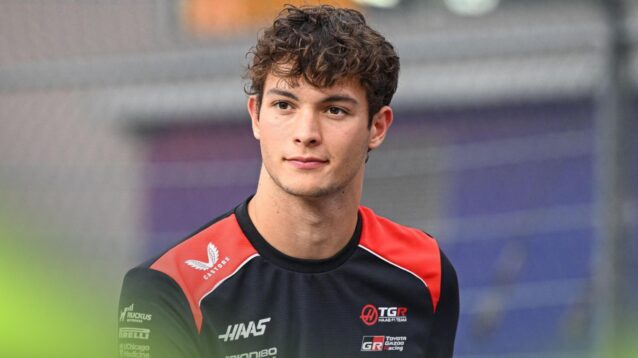

Oliver Bearman crash proves F1 ‘cannot ignore’ 2026 risks, says Haas boss


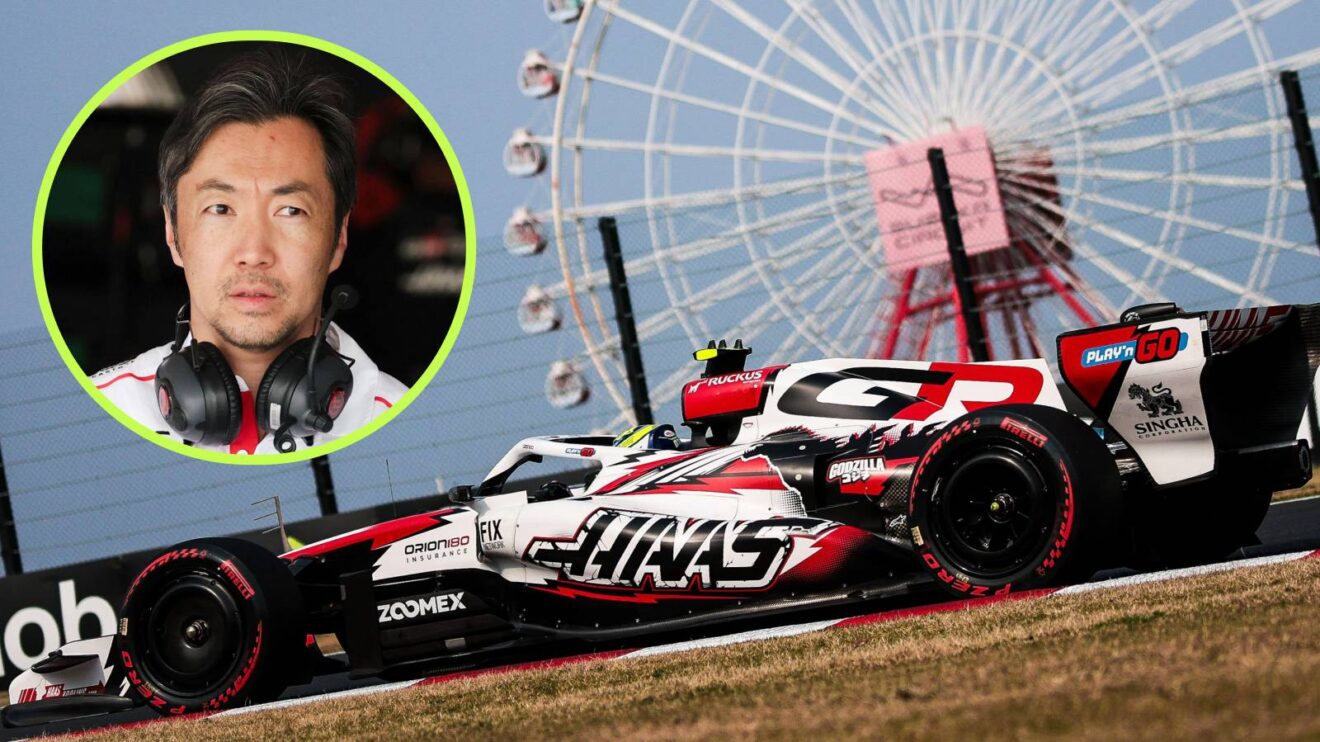
Ayao Komatsu has said incidents such as Oliver Bearman's can't be ignored when it comes to discussing the F1 2026 regulations tweaks.
Oliver Bearman’s frightening accident at Suzuka “can’t be ignored”, and Haas’ boss Ayao Komatsu is confident solutions to F1’s current issues can be resolved.
The change in power unit regulations for F1 2026 has created new and unusual hurdles for the sport to figure out, with an alarming crash at Suzuka triggered by a closing speed delta that caught Oliver Bearman out.
Bearman
Want more PlanetF1.com coverage? Add us as a preferred source on Google to your favourites list for news you can trust.
Bearman ended up in the barriers halfway through last weekend’s Japanese Grand Prix, when the British driver was caught out by his overspeed relative to Alpine’s Franco Colapinto.
With Bearman’s Ferrari power unit in energy deployment mode, he caught Colapinto with a 50km/h speed advantage while approaching the Spoon corner. When Colapinto thought about a defence by moving across in what would have been a standard move under the old regulations, Bearman had to take avoiding action and lost control as he skated over the grass.
Bearman ended up hitting the barriers sideways with a 50G impact that left him limping away from the car. He was taken for precautionary checks in the Medical Centre, where he was cleared of injury.
Haas‘ team principal Ayao Komatsu has previously urged against knee-jerk reactions to tweak the regulations too quickly, and has pushed for a measured approach towards refining the regulations amidst the cacophony of negativity from the drivers through the opening three race weekends.
After the Chinese Grand Prix, Komatsu suggested a sample size of five race weekends, across a variety of circuits, is needed to help better inform the teams, the FIA, and the power unit manufacturers [PUMs] on data that can be used to bring about further refinements.
“I’m sure if you make those knee-jerk reactions, you can have unintended consequences, so that’s exactly what we need to avoid now,” Komatsu said after the weekend in Shanghai.
Following his driver’s accident at Suzuka, Komatsu explained that his stance on taking a measured approach hasn’t changed, but said it’s clear safety matters must be paramount for when the F1 Commission and future meetings of the Power Unit Advisory Committee [PUAC] are held: meetings are currently scheduled during the ‘Spring break’ to be held on April 9th.
“We always said, like lots of things, even the starts as well, we said we have to see different conditions,” Komatsu said, explaining that considerations of a sporting nature also have to be balanced.
“And then, for instance, adjustments to be made on the starts, at the Bahrain test 2, I think that was very judged. You know, still have the difference in PUMs, some people are good at the start, some people less so, etc.
“But, so far, it’s been safe. So we really have to be careful about sporting versus safety. We shouldn’t be using safety as an excuse, but, at the same time, safety should be obviously paramount.
“You’ve just got to be very careful looking at creating enough of a data set. We’ve done three events. We had one incident, and then… I don’t know what the solution is just yet, but we just have to be calm and discuss it all together at the F1 Commission.
“Which I’m happy we’re doing, every time we have a meeting with all the TPs, with the FIA and F1, nobody is really pushing for a sporting advantage.
“So I think, as an F1 community, I think we are discussing in the right manner. As an F1 community together, we’ve got to look at this. You cannot ignore it.
“I cannot say right now what the solution should be, but I’m sure we’ll be discussing it… We’ve got a meeting on the 9th of April as well, with the PUMs and the PUAC members as well.
“I’m sure we’ll be discussing it at the team principal level as well. We’ll all be working closely together to make sure that we improve the safety as well as the racing spectacle.
“Safety should always be at the top of the list. We’ve been talking about closing speed, and then this accident happened. Now that we have this one example, we’ll be discussing the best way to go forward. For sure, nobody’s going to ignore it.”
More on Oliver Bearman’s Suzuka crash
Oliver Bearman opens up on terrifying 50G Suzuka crash
F1 cannot ignore warning signs after Oliver Bearman crash exposes 2026 flaws
A major factor in the criticisms levelled at the new regulations has been the extreme change in driving dynamics that have been brought on by the new power units, which have shifted the ratio of the power output of the internal combustion relative to electrification to a near 50/50 split.
This change means that the harvesting of energy for efficient deployment has become a top priority for laptime but, in order to harvest this energy, drivers have to prioritise lifting and coasting, as well as ponderous approaches to corners in order not to waste energy at less efficient moments.
It’s particularly egregious during qualifying and, as a consequence, it led to the FIA reducing the amount of harvestable energy for that session at Suzuka, meaning the permitted 8mJ of energy could be harvested via more natural driving techniques.
But, with deployment of energy largely done via engine algorithms rather than being driver-controlled, Komatsu said he’s eager to see any tweaks made place the initiative back with the drivers.
“The driver should be in charge of driving, right?” he said.
“Then, for me, the systems should be like your tool set to be able to help you optimise your driving/ laptime.
“But, at the moment, systems have so many constraints that drivers are driving to make the system function or optimise the system.
“For me, it’s the other way around. But [we’ve] already taken a small step here for the qualifying by reducing the amount of energy you can recover.
“So that was one good step, but we already identified several areas. The small differences don’t have to be a wholesale change that can improve some of the issues we saw in Melbourne and Shanghai; this is another example.
“So we’re collectively learning so many things, but I’m sure if we put those, let’s say, relatively even minor improvements, I think you can drastically improve the show as well as the safety.
“Sitting here, I don’t know exactly what mechanism we should use for that particular incident. But for instance, things that happened in Melbourne, Shanghai, at least in my eyes, there’s a pretty clear solution we can take, which is not big.”
Want to be the first to know exclusive information from the F1 paddock? Join our broadcast channel on WhatsApp to get the scoop on the latest developments from our team of accredited journalists.
You can also subscribe to the PlanetF1 YouTube channel for exclusive features, hear from our paddock journalists with stories from the heart of Formula 1 and much more!
Read Next: F1 fans deliver overwhelming verdict after Oliver Bearman Suzuka crash poll